Faraday Bags: The Complete Guide

A Faraday bag is a conductive pouch designed to isolate a device from wireless signals. People use them for phones, car keys, laptops and other electronics — but what they actually block depends on the bag, its closure and the frequencies involved.

At a glance
What it doesReduces wireless communication to/from a device
Common usesPhones, car keys, laptops, travel
What matters mostFrequency coverage, closure, construction
Biggest misconception“Faraday” doesn’t automatically mean every signal is blocked

Explore by device use-case

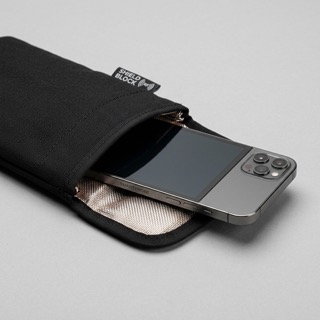
Smartphone sliding into a black Faraday phone bag

Phones

Isolate your phone's signals
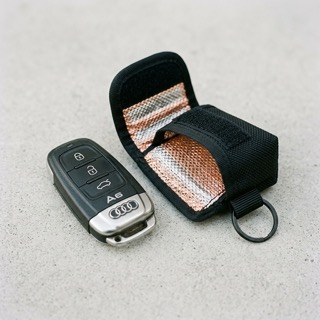
Car key fob next to a compact Faraday pouch

Key fobs

Stop relay theft
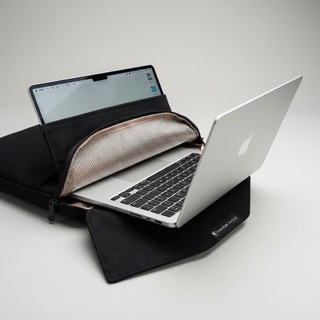
Laptop entering a protective Faraday sleeve

Laptops

Larger device shielding
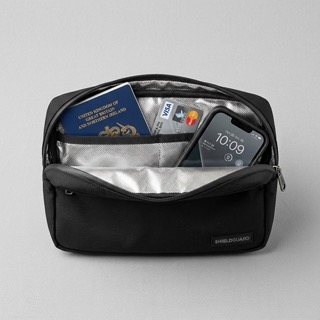
Passport and phone in a Faraday travel organizer

Travel

Signal protection on the move

How electromagnetic shielding works in a flexible bag

The principle originates from physicist Michael Faraday in 1836. In simplified terms, a continuous layer of conductive material — copper, silver, or nickel-coated fabric — causes charges to redistribute across its surface in a way that opposes and reduces the electromagnetic field passing through it. The real physics is more involved — it depends on frequency, material conductivity, and thickness — but the practical effect is a meaningful reduction in signal strength inside the enclosure. How much reduction depends on the specific bag, not the category as a whole.

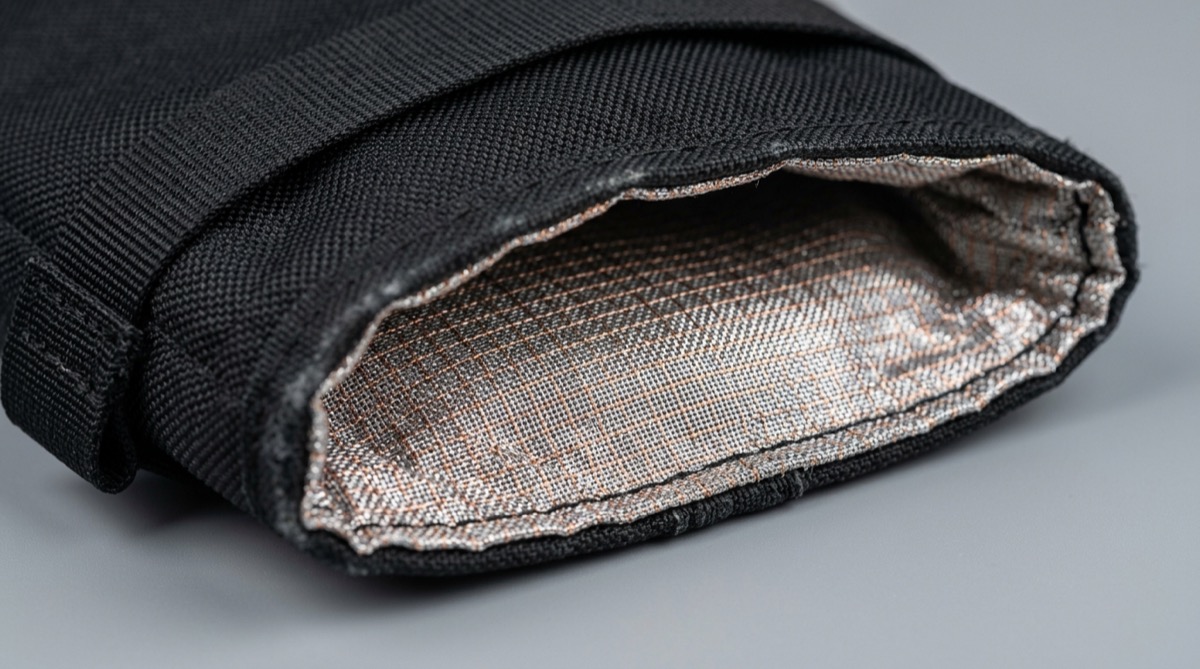
Close-up of nickel-coated conductive fabric used in Faraday bag shielding
Conductive lining inside a signal-blocking pouch. Illustration/reference image.
Signals Faraday bags are commonly designed to attenuate
Cellular (2G/3G/4G/5G)Commonly targeted (600 MHz – 6 GHz)
Wi-Fi (2.4/5/6 GHz)Commonly targeted (802.11 a/b/g/n/ac/ax)
Bluetooth & BLE BeaconsCommonly targeted (2.4 GHz ISM band)
Satellite Navigation (GPS/GNSS)Commonly targeted (1.1–1.6 GHz reception)
RFID & NFC ProximityCommonly targeted (125 kHz & 13.56 MHz)
Keyless Entry Fob SignalsCommonly targeted (315 MHz & 433 MHz)

Actual attenuation varies by product, materials, and build quality. This shows what the category is commonly designed to address — not a guarantee for any specific bag. See individual product pages for tested or claimed figures where available.

Where marketing claims break down

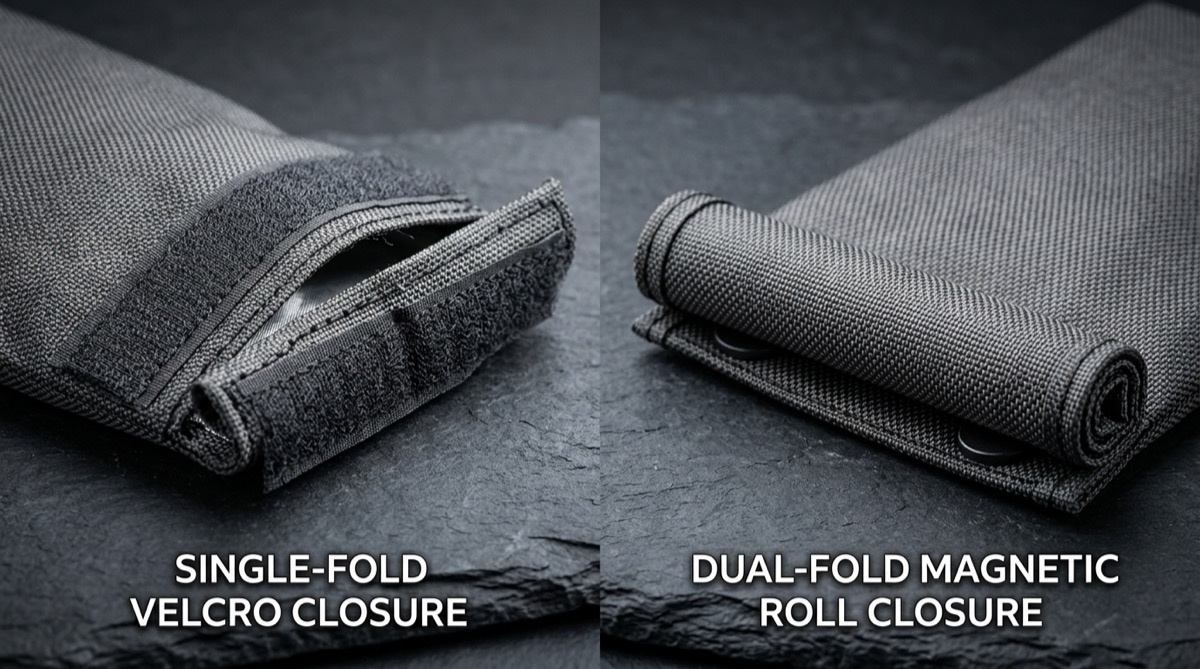
A Faraday bag isn't an absolute barrier against all physics — it works by attenuation, reducing wave amplitude rather than eliminating it entirely. Shielding effectiveness is measured in decibels (dB); manufacturers commonly claim 60–80 dB, which would reduce signal strength by over 99.9%, generally enough to prevent a connection. But single-fold closures and micro-creases in worn fabric can leak short-wavelength signals like 5 GHz Wi-Fi or high-band 5G — the closure and fabric condition matter as much as the rated number.

Claim Check
“Military-grade shielding”

Sounds impressive. Without a frequency range, an attenuation measurement, and a test method, it doesn’t actually tell you anything.
Close-up comparison of a single-fold Velcro seam versus a dual-fold magnetic roll closure on a Faraday bag
Single-fold Velcro closure compared to a dual-fold magnetic roll seal. Illustration/reference image.

Articles & Guides

In-depth technical explainers, test protocols, and comparative evaluations in this cluster.

What Is a Faraday Bag?

A conductive pouch that isolates electronics from wireless signals. How shielding works, what it attenuates, and where its limits lie.

Read foundational explainer →
Explainer

Do Faraday Bags Actually Work?

Faraday shielding relies on proven physics, but real-world protection depends on closure design, seam integrity, and frequency coverage.

Explainer

What Do Faraday Bags Block (and What Don't They)?

What Faraday bags typically attenuate — cellular, Wi-Fi, Bluetooth, GPS, and RFID — and where hard boundaries like mmWave 5G begin.

Explainer

Can a Phone Be Tracked Inside a Faraday Bag?

How cellular, GPS, and Bluetooth mesh tracking work, why physical RF isolation stops them, and the real-world failure modes to watch for.

How to

How to Test a Faraday Bag at Home

A phone, another device, and a few minutes can catch an obviously ineffective Faraday bag. How to test cellular, Wi-Fi, Bluetooth, GPS, and car keys properly.

Compare

Faraday Bag vs. Faraday Box: Which Do You Actually Need?

Bags and boxes rely on the same shielding principle but trade off differently on portability, consistency, and use case. An honest comparison.

Compare

Airplane Mode vs. Faraday Bag: Which Actually Isolates Your Phone?

Airplane mode is a software setting that behaves inconsistently and can be overridden. A working Faraday bag physically blocks signals. An honest comparison.

Explainer

Faraday Bags for Phones: What They Block & How to Choose One

Faraday bags for phones can attenuate cellular, Wi-Fi, Bluetooth, and GPS — but performance is product-specific. Here's what actually matters when choosing one.

Explainer

Faraday Pouches for Car Keys: Do They Stop Relay Theft?

A Faraday pouch isolates a key fob's radio signal to interfere with relay theft. How it works, what it cannot prevent, and how to test yours.

Explainer

Faraday Bags for Laptops: What Changes at That Size

Laptops carry a different radio footprint than phones, and a bigger enclosure means more seam to seal properly. What actually matters when shielding one.

Explainer

Faraday Bags for Travel: What They're Actually Useful For

Faraday bags for travel can isolate a phone, laptop, or key fob — but a passport or card needs a different kind of protection. Here's what actually applies to what.