- What it does: Isolates a key fob from wireless communication when properly enclosed.
- Common use: Reducing exposure to relay attacks on passive/keyless vehicle systems.
- What matters: Shielding performance, closure, size, and durability.
- Easy check: Try the keyless-entry function while the key is properly sealed inside.
- Biggest misconception: A Faraday pouch doesn’t make a vehicle theft-proof — it addresses one attack surface, not vehicle security generally.
Why put a car key in a Faraday pouch?
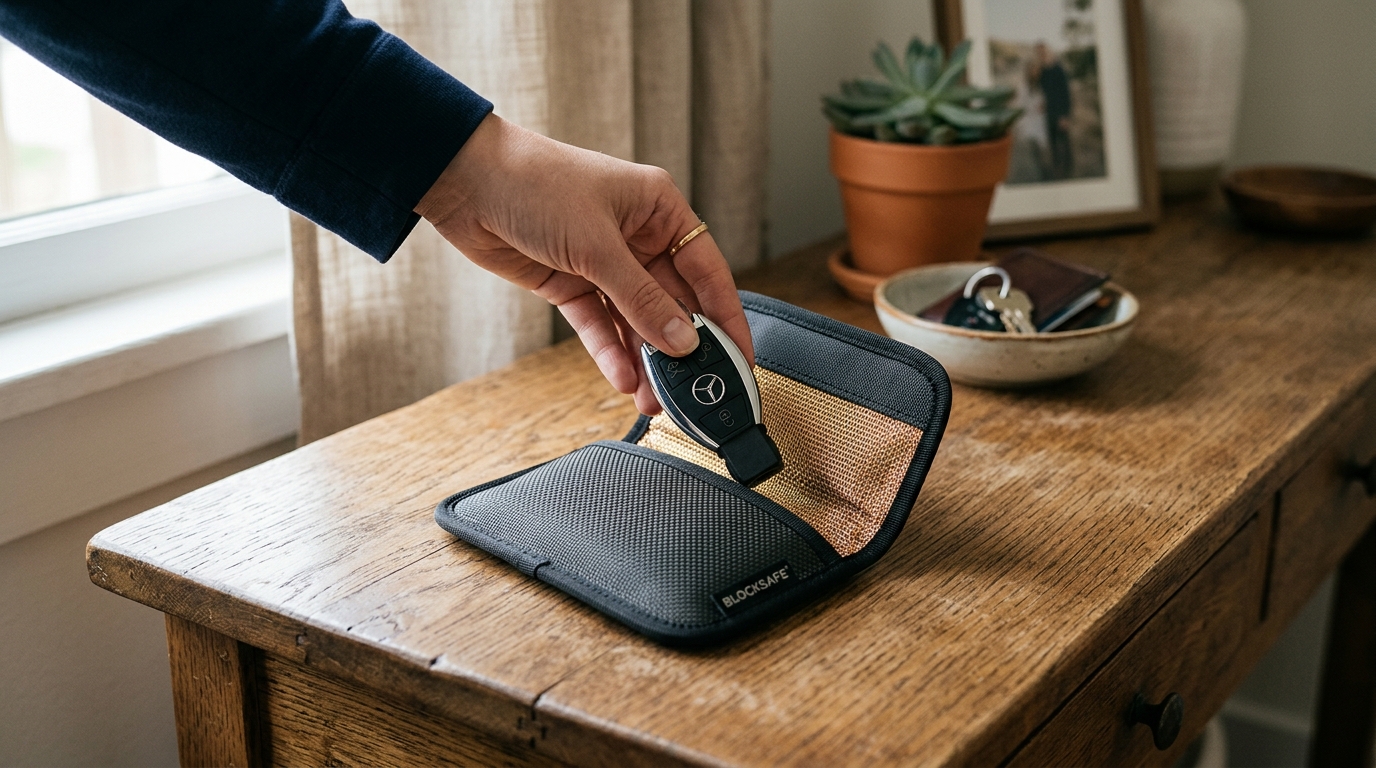
The situation is simple: the car is parked, the legitimate key is somewhere inside the house, and the vehicle’s passive-entry system is designed to recognize that key whenever it’s nearby, without anyone pressing a button. That convenience is exactly the vulnerability — the system doesn’t distinguish between “the key is nearby” and “something is successfully relaying the key’s signal from further away.” Isolating the key’s radio signal when it’s not in use removes that ambiguity.
What is a keyless relay attack?
At a high level: two people work together, one standing near the house (near the key) and one standing near the car. A device near the key captures its signal; a second device near the car relays that captured signal to the vehicle, extending its effective range far beyond where it would normally reach. The car, unable to tell the difference between a nearby key and a relayed signal from one, behaves as if the legitimate key is present. This doesn’t require breaking in, cloning anything, or physically accessing the key — only capturing and relaying a signal that the key is broadcasting anyway as part of normal operation.
That’s deliberately the extent of detail this article goes into — the goal is understanding the defensive principle, not a how-to.

Do Faraday pouches actually help?
If a relay attack depends on communicating with the legitimate key, sufficiently attenuating that communication interferes with that specific attack path — this is the basic principle, and it’s sound. But whether a specific pouch actually delivers that in practice depends on shielding material, closure, seam integrity, physical wear, and whether it’s used correctly every time, the same variables covered in Do Faraday bags actually work?. Not every product marketed as a Faraday pouch performs identically, and “Faraday pouches stop relay attacks” is true as a category-level principle in a way that doesn’t automatically transfer to any specific product you might buy.
One genuinely useful, well-sourced data point here: Thatcham Research — the UK’s independent automotive security research body, whose relay-attack testing directly informs vehicle security ratings — recommends Faraday pouches as a mitigation, but specifically advises testing one regularly rather than assuming it keeps working indefinitely, noting that pouches are typically effective for around six months, sometimes less, before performance degrades. This lines up with the broader pattern covered in Do Faraday bags actually work?: flexible shielding fabric is subject to real mechanical wear, and a pouch that worked perfectly when new isn’t guaranteed to still work the same way a year later.
Thatcham also points to complementary measures worth knowing about even if you use a pouch: some manufacturers let owners enable a “sleep” mode on the fob, where it stops broadcasting after a period of inactivity (ranging from one or two minutes to 15–30 minutes depending on the vehicle), and newer vehicles are increasingly adopting Ultra-Wide Band (UWB) key technology, which is designed to resist relay attacks by design rather than requiring the owner to store the key defensively at all.
Several products in this category are marketed with absolute language like this. “Completely” and “guaranteed” aren’t things a fabric pouch can actually promise — performance depends on the specific product, how it’s closed, and how worn it is, and even Thatcham’s own guidance treats pouches as something to periodically retest, not a fit-once-and-forget solution. A listing that states a real attenuation figure and frequency range is giving you something to evaluate; “completely” and “guaranteed” on their own are not.
How to test a Faraday key pouch with your car
- First, confirm the keyless-entry function works normally with the key outside the pouch, so you know what a working baseline looks like.
- Put the key fully inside the pouch and close it exactly as instructed — a rushed or partial seal defeats the point.
- Approach the vehicle and attempt to use the normal keyless-entry function.
- If the vehicle doesn’t detect the key and doesn’t unlock, that’s a reasonable sign the pouch is working. If it unlocks normally, the pouch isn’t providing adequate shielding, at least for your specific vehicle and key.
- Repeat this check periodically rather than testing once and assuming the result holds — as covered above, pouches can lose effectiveness over months of use.
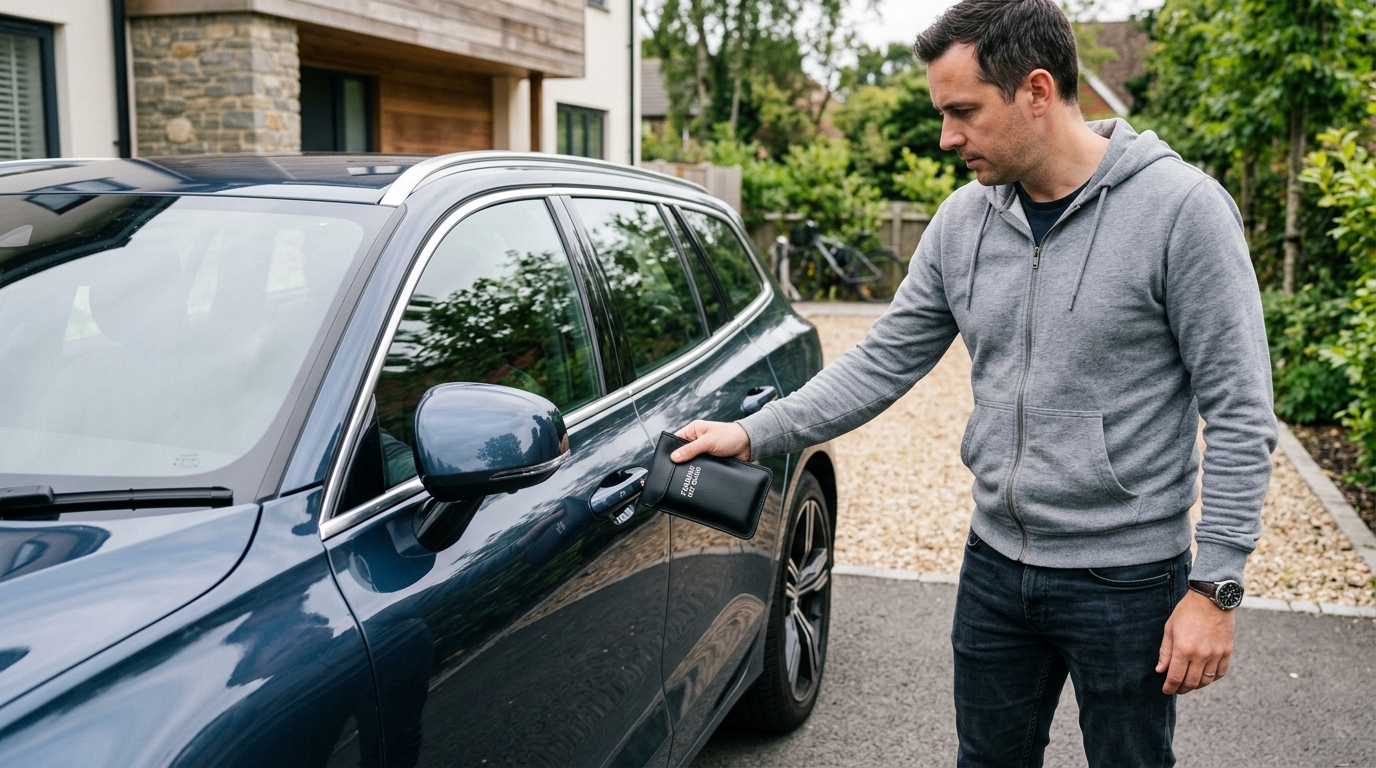
A test like this is useful for catching an obvious failure with your actual vehicle, but it isn’t the same as a laboratory measurement of shielding effectiveness across a full frequency range — see How to test a Faraday bag for the broader limitations of home testing.
Your car still unlocks — what now?
A few practical, common causes, roughly in order of likelihood: the pouch wasn’t fully closed (a fold that looks sealed but isn’t maintaining continuous contact along its length), the key isn’t in the actual shielded compartment if the product has multiple pockets, the shielding fabric has worn from months of use, or the pouch simply isn’t providing adequate attenuation at your vehicle’s specific frequency. If the car can still see the key, the pouch isn’t doing the one job you bought it for — at least in that test — and it’s worth checking each of these before assuming the product is fundamentally broken.
What should you look for in a Faraday key pouch?
Shielded compartment. Some products have multiple pockets, only one of which is actually shielded — make sure the key goes in the right one.
Closure. The closure is part of the shielding enclosure, not just a way to stop the key falling out. A roll-top or fold-seal design that maintains continuous contact tends to be more forgiving of an imperfect close than a single-fold velcro flap.
Size. The key needs to fit without preventing the pouch from sealing fully.
Shielding specifications. Look for a stated frequency range alongside any attenuation figure — a number with no frequency context tells you less than it sounds like it does.
Testing evidence. Prefer listings that state tested frequencies or an attenuation measurement over ones relying purely on adjectives like “military-grade.”
Durability. Key pouches get opened and closed constantly — daily, in many households — which is exactly the kind of repeated mechanical stress that degrades shielding fabric over time. This is part of why Thatcham’s six-month retest guidance matters in practice, not just in theory.
Usability. If a pouch is annoying enough to close correctly that someone stops bothering, its spec sheet stops mattering. The best pouch is the one that actually gets used properly every single day, not the one with the most impressive number on the listing.
Faraday key pouches worth considering
PrivacyLabz may earn a commission from qualifying purchases. We have not physically tested these products unless explicitly stated.
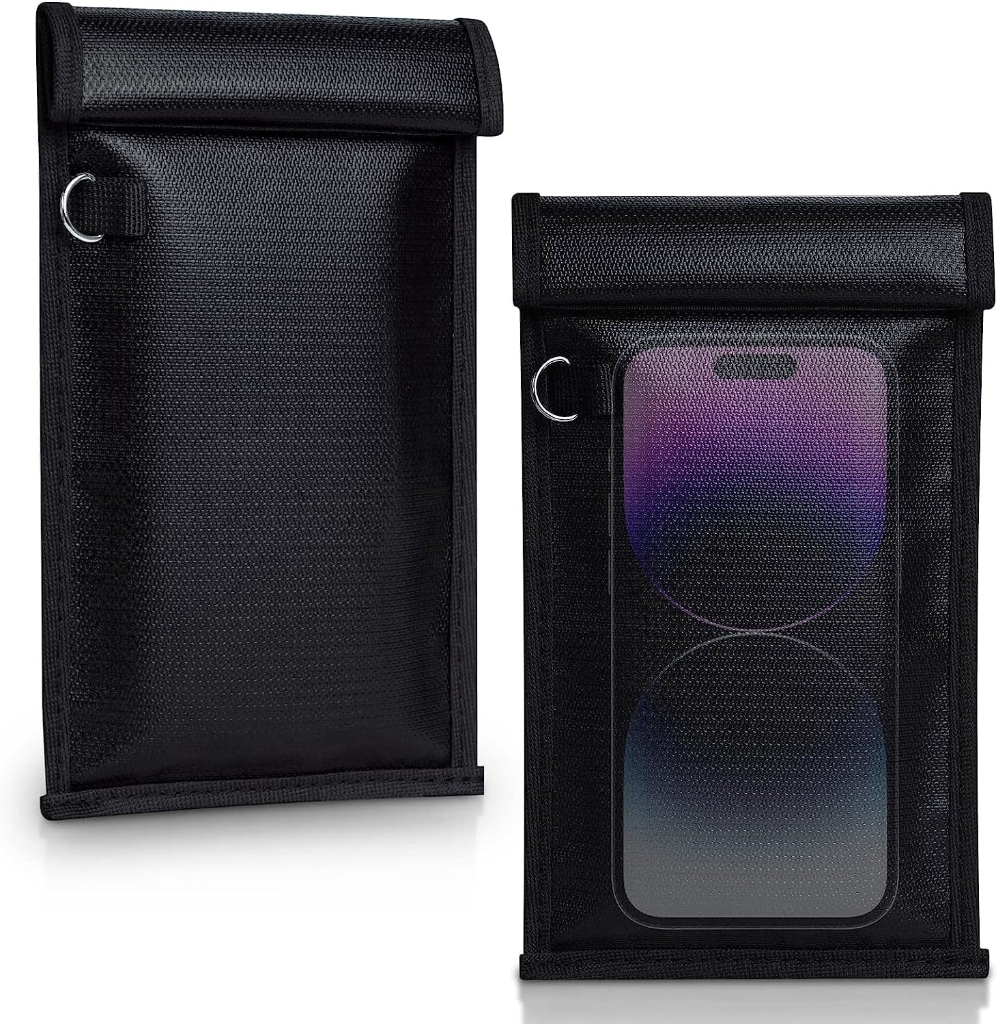
Simket 2-Pack Military Grade Faraday Bags
Sized for car keys and phones with a manufacturer claim of “over 80 dB” attenuation. A straightforward multi-pack option offering physical signal isolation for daily key storage at an accessible price.
View on Amazon →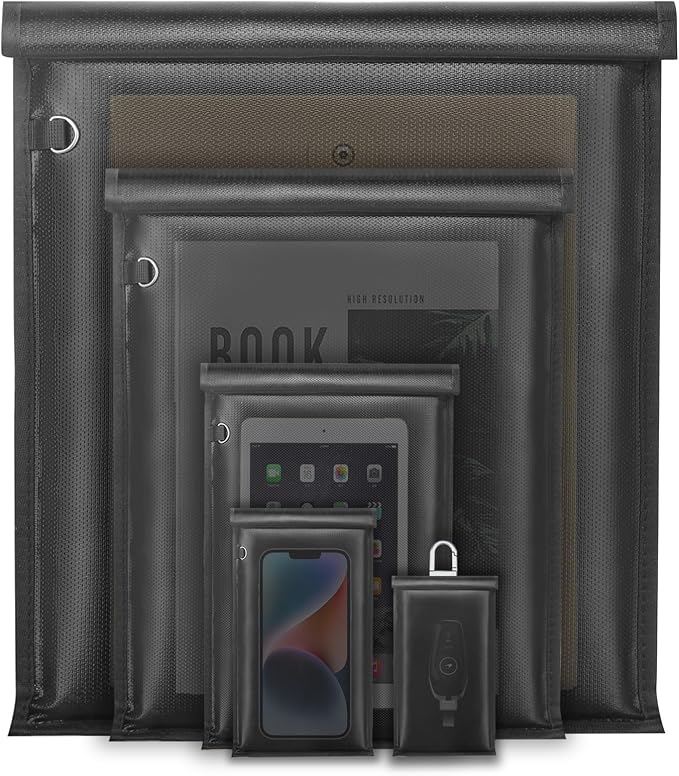
yaokvide Large Faraday Bags, 5-Pack
A versatile 5-piece set including dedicated compact pouches sized for car key fobs alongside larger bags. Ideal for multi-car households wanting to protect both primary and spare keys under a single purchase.
View on Amazon →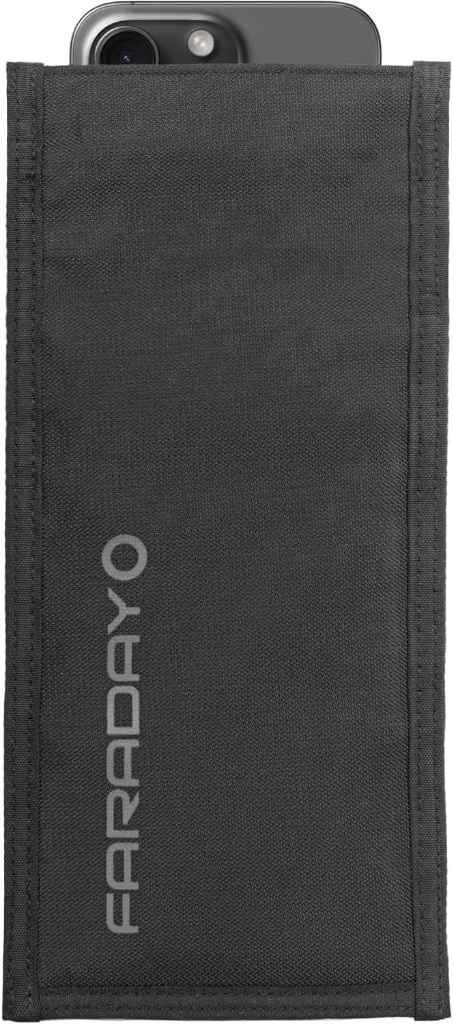
Faraday Defense — Faraday Bag Jacket Pro
The strongest specification claim across our reviews: “-85dB attenuation, 400MHz–4GHz.” Constructed from heavy-duty CORDURA nylon with a magnetic seal designed for rigorous evidence preservation, balanced by a higher price.
View on Amazon →Faraday pouch vs. Faraday box for car keys
A pouch is portable and suits individual key storage — easy to carry, but it needs to be opened and closed correctly every time, which is exactly the repeated-use pattern that wears shielding fabric down over months. A box stays in one place, which can be more convenient for a household with several keys to store, and doesn’t have the same fold-related wear pattern since it isn’t handled the same way — covered in more depth in Faraday bag vs. Faraday box. Neither is automatically better — a pouch suits a single key you carry daily; a box suits a household storing multiple keys somewhere fixed, like near the front door overnight.
What a Faraday pouch won’t protect your car from
This is worth being direct about: a Faraday pouch addresses signal relay specifically. It does nothing about physical key theft (someone taking the actual key), stolen credentials, other electronic attack methods unrelated to the passive key signal, or general vehicle vulnerabilities. Relay-attack mitigation is not the same thing as complete vehicle theft prevention, and treating a pouch as a full security solution would be a mistake — it’s one layer addressing one specific, real vulnerability.
Do you actually need one?
It depends on whether your vehicle actually uses a susceptible passive/keyless system in the first place — not every car does, and some manufacturers have already shipped fixes (sleep-mode fobs, UWB) that reduce or remove the vulnerability without needing a pouch at all. If your vehicle has keyless entry and start and you’re not sure whether it has any of these protections, checking with the manufacturer or dealer is a reasonable first step. Where the vulnerability genuinely applies, a cheap pouch is a low-cost, low-effort precaution — not because the threat is exaggerated, but because the fix is inexpensive enough that the cost-benefit is straightforward for the specific systems it applies to.
The bottom line
A Faraday pouch isn’t an anti-theft force field — its job is narrower: isolating the key from radio communication well enough to interfere with an attack that depends on communicating with that key. The questions that actually matter are whether your vehicle’s system makes this relevant, whether the pouch you have actually isolates the key, and whether you’ll use it correctly every day rather than most days. Already have a pouch? Learn how to test it →
Frequently asked questions
Do Faraday pouches really stop keyless car theft?
They can interfere with relay attacks specifically, which is one method of keyless theft — not all of them, and only if the pouch is genuinely providing adequate shielding and used correctly.
How do I know if my Faraday pouch is working?
Seal the key inside and try the keyless-entry function on your vehicle — if it doesn’t unlock, that’s a reasonable sign it’s working. Test periodically, not just once.
Should I keep my spare key in a Faraday pouch too?
Yes — Thatcham Research’s guidance specifically recommends this, since a spare key left unshielded is exposed to the same relay-attack risk as the primary one.
Can I leave my car key in a Faraday pouch all the time?
You can, but you’d need to remove it every time you want to use keyless entry, which defeats the convenience the system is built for — most people use a pouch specifically for overnight storage rather than constant use.
Do Faraday pouches wear out?
Yes — Thatcham Research’s own guidance notes pouches are typically effective for around six months, sometimes less, which is why periodic retesting matters rather than a one-time check when new.
Is a Faraday box better than a pouch for car keys?
Not automatically — a box tends to hold up better over time since it isn’t folded and handled the same way, but a pouch is more practical if you’re carrying the key rather than storing it in one place. See Faraday bag vs. Faraday box for the fuller comparison.
Sources & Technical Literature
- “Keyless Car Theft Advice & Mitigations” — Honest John / Thatcham Research Guidance. Details on regular testing protocols and Thatcham’s observation that pouches are typically effective for around six months before mechanical wear degrades shielding.
- “Thatcham Research Keyless Car Theft Testing” — Motoring Research. Consumer Security Rating procedures, keyless relay vulnerability testing, and sleep-mode fob timeout mechanisms.
- “Thatcham Research Guidance on Vehicle Theft Devices” — Insurance Edge. Multilayered vehicle protection guidelines covering primary and spare key storage, Faraday shielding, and Ultra-Wide Band (UWB) distance-bounding technology.
- “Do Faraday Bags Actually Work?” — PrivacyLabz Technical Analysis. Analysis of flexible conductive fabric abrasion cycles, seam degradation, and closure contact integrity.