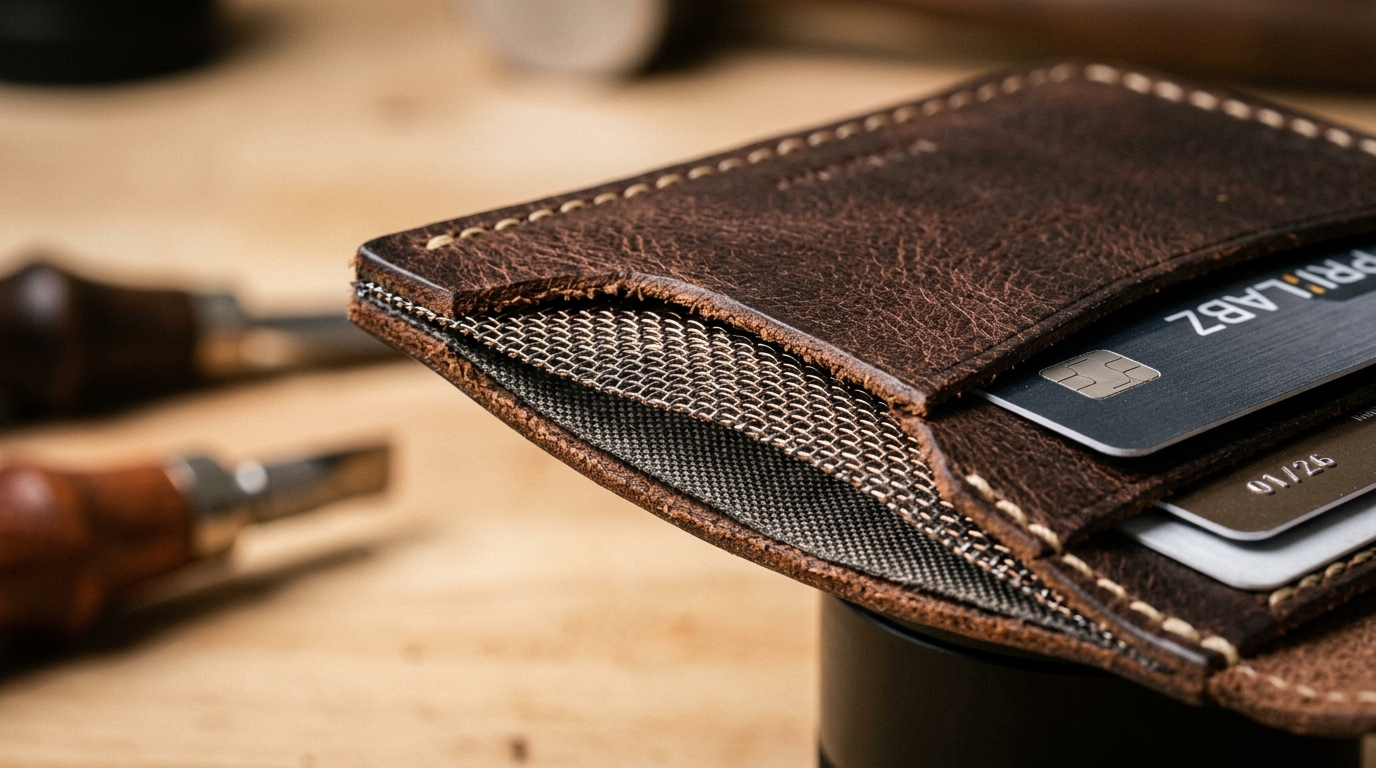
RFID blocking products are designed to interfere with wireless communication between an RFID-enabled item and a reader. You’ll see the technology built into wallets, passport sleeves, card holders, and dedicated blocking cards — but what it actually protects, how well it works, and whether you need it depends heavily on the specific RFID system involved. Not all RFID is the same, and a product built around one type of card isn’t automatically validated for another.
At a glance
What it doesAttenuates near-field reader signals (13.56 MHz)
Common usesContactless cards, biometric passports, access badges
What matters mostFrequency band (HF vs. LF), material, coverage
Biggest misconceptionDoes not protect against online data breaches or cyber fraud
An RFID reader emits an alternating electromagnetic field. A compatible passive RFID tag or smart card, when brought close enough, draws electrical power directly from that field via near-field inductive coupling. It then responds with its stored credential data — no onboard battery required.
This explains why a contactless credit card or transit pass works instantly when tapped against a reader terminal. RFID blocking physically interferes with this exchange by placing a continuous conductive barrier between the reader and the card, attenuating the field before it can induce enough voltage to wake the chip.
The underlying physics mirrors the electromagnetic shielding principles explored in Faraday Bags: The Complete Guide, but is specifically engineered for proximity inductive coupling at narrower frequency ranges.
This is the single most important technical concept to understand before evaluating any shielding product. “RFID” is not a single unified protocol — it spans completely different frequency allocations, ranges, and cryptographic architectures.
Low Frequency
LF RFID
125–134 kHz
Typical Uses: Building access control badges, animal identification chips, legacy proximity keyfobs.
Read Range: Long-range (up to 12 meters). Not used for consumer payment cards or personal credentials.
The credentials most people carry daily — contactless payment cards (ISO/IEC 14443) and electronic passports (ICAO Doc 9303) — operate at 13.56 MHz in the HF band. NFC on your smartphone uses this identical frequency. UHF, by contrast, is a warehouse logistics technology.
The practical takeaway: an RFID-blocking wallet evaluated for 13.56 MHz addresses the frequency band that actually matters for personal cards. However, that does not mean every product labeled “RFID blocking” has been tested for that specific band, or tested at all beyond manufacturer marketing.
What does RFID blocking actually protect?
To understand the genuine value of a shielded wallet or sleeve, it is essential to distinguish between physical proximity skimming and completely unrelated cyber fraud vectors.
Contactless Payment Cards
Modern payment cards use ISO/IEC 14443 at 13.56 MHz, with an effective read range under 10 cm. Conductive shielding physically prevents an unauthorized proximity reader from powering the card. What it does not protect against: stolen card credentials from an online database breach, phishing, malware, physical card loss, or fraudulent transactions unrelated to proximity wireless reading.
Electronic Passports
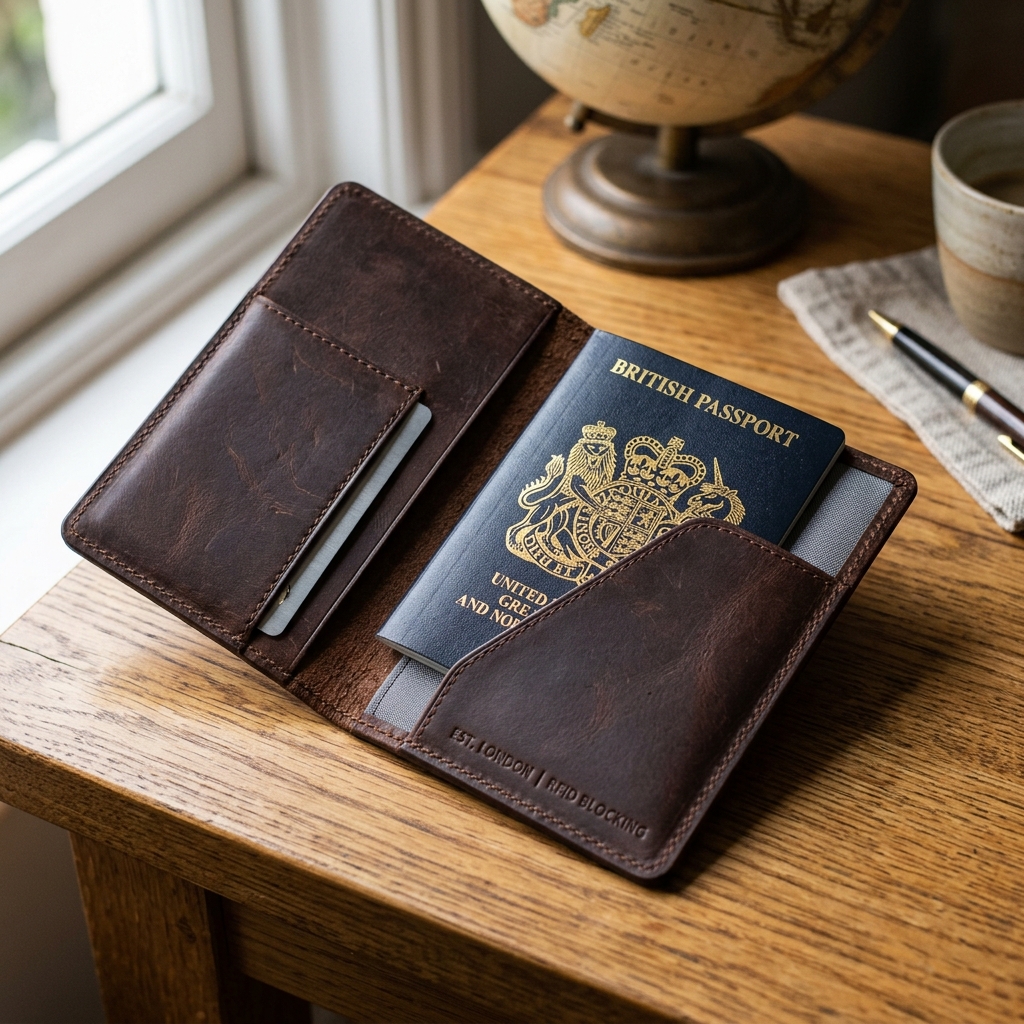
Biometric e-passports store identity and facial data on an ISO 14443 chip per ICAO Doc 9303. An RFID sleeve prevents the closed booklet from being interrogated by external scanners. However, modern passports already incorporate mandatory cryptographic access controls (BAC and PACE) preventing casual reading — a sleeve adds a physical barrier, not a fix for an otherwise open vulnerability.
Access Cards & Building Badges
Corporate badges vary significantly. Some legacy access systems use 125 kHz (LF), while modern secure systems use 13.56 MHz (HF). A consumer wallet or sleeve validated for payment cards will not automatically shield a 125 kHz badge without verification of sub-megahertz attenuation.
Other RFID Tags
UHF logistics tags exist on consumer retail goods you purchase, not credentials you carry day to day. They fall outside the operational scope of what an everyday RFID-blocking wallet needs to address.
Claim Check
“Stops electronic pickpocketing”
This phrase shows up constantly in RFID-product marketing, and it bundles several different questions into one scary-sounding claim. What RFID technology, exactly? What frequency? What information would actually be accessible if a read succeeded? At what practical range — real-world proximity reading is far shorter than movie-style claims suggest? And what security does the credential already have, independent of the wallet? None of this means RFID shielding is fake — the shielding itself is real, measurable physics. It means “stops electronic pickpocketing” is doing the marketing’s job, not describing a specific, checkable claim.
Do you actually need RFID blocking?
This is not a simple yes or no, and PrivacyLabz does not pretend it is. Electromagnetic shielding is real, repeatable physics — that is not in question. The separate question is whether the specific threat it addresses represents a realistic risk for you, given the cards you carry, your travel patterns, and how you use them.
Core Principle
“Does the shielding work?” and “Do you actually need it?” are two completely different questions.
Treating technical efficacy and personal threat level as the same question is precisely how marketing oversells real technology. Factors worth weighing include how frequently you transit crowded international hubs, what cryptographic protections your card issuers mandate, and whether carrying a shielded product introduces unnecessary friction or expense.
For some, an inexpensive foil sleeve is a sensible, zero-effort precaution. For others, it solves a problem that was never likely to impact them. Both conclusions are valid under different threat models.
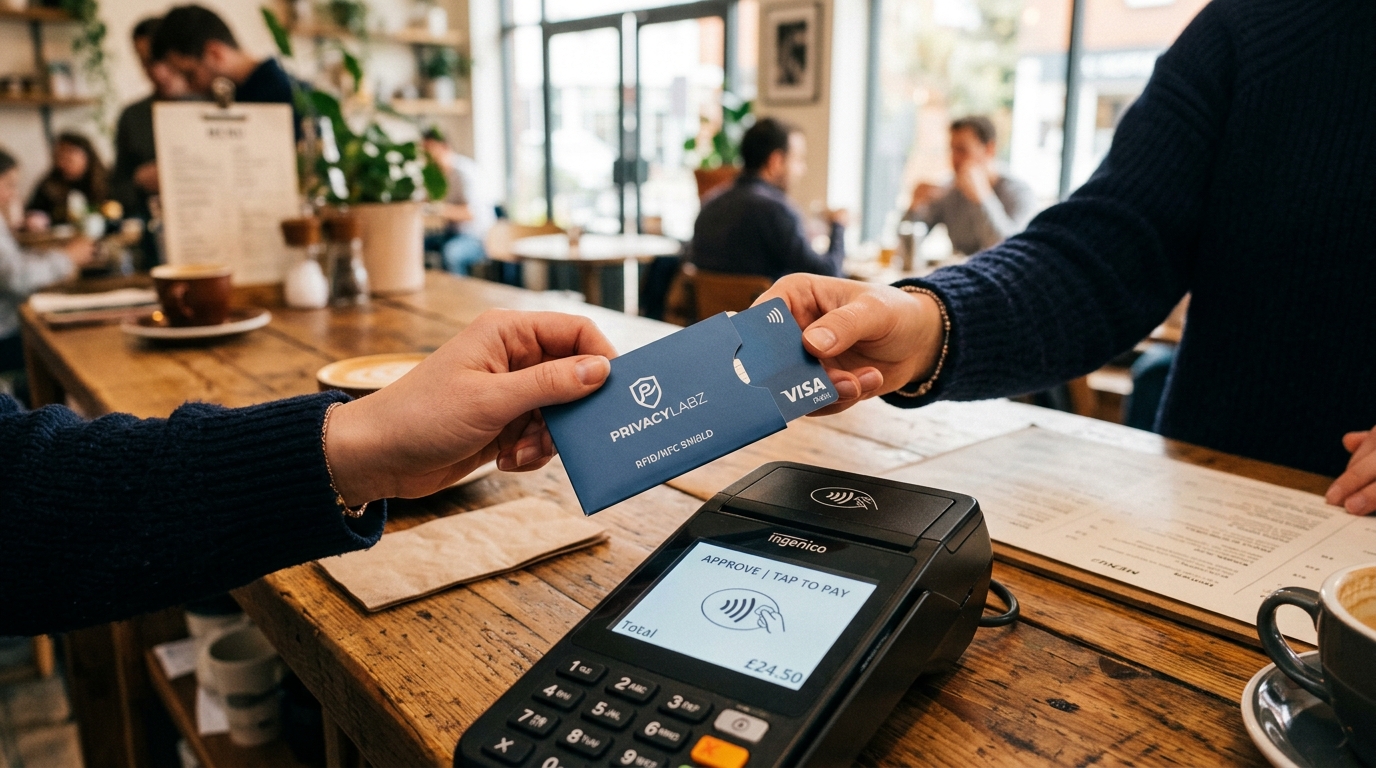
Contactless payment card held inside a protective RFID sleeve near an active payment terminal. Reference image.
RFID wallet vs. RFID sleeve vs. blocking card
If you decide to isolate your cards, three distinct form factors exist on the market. Each involves different convenience and protection trade-offs:
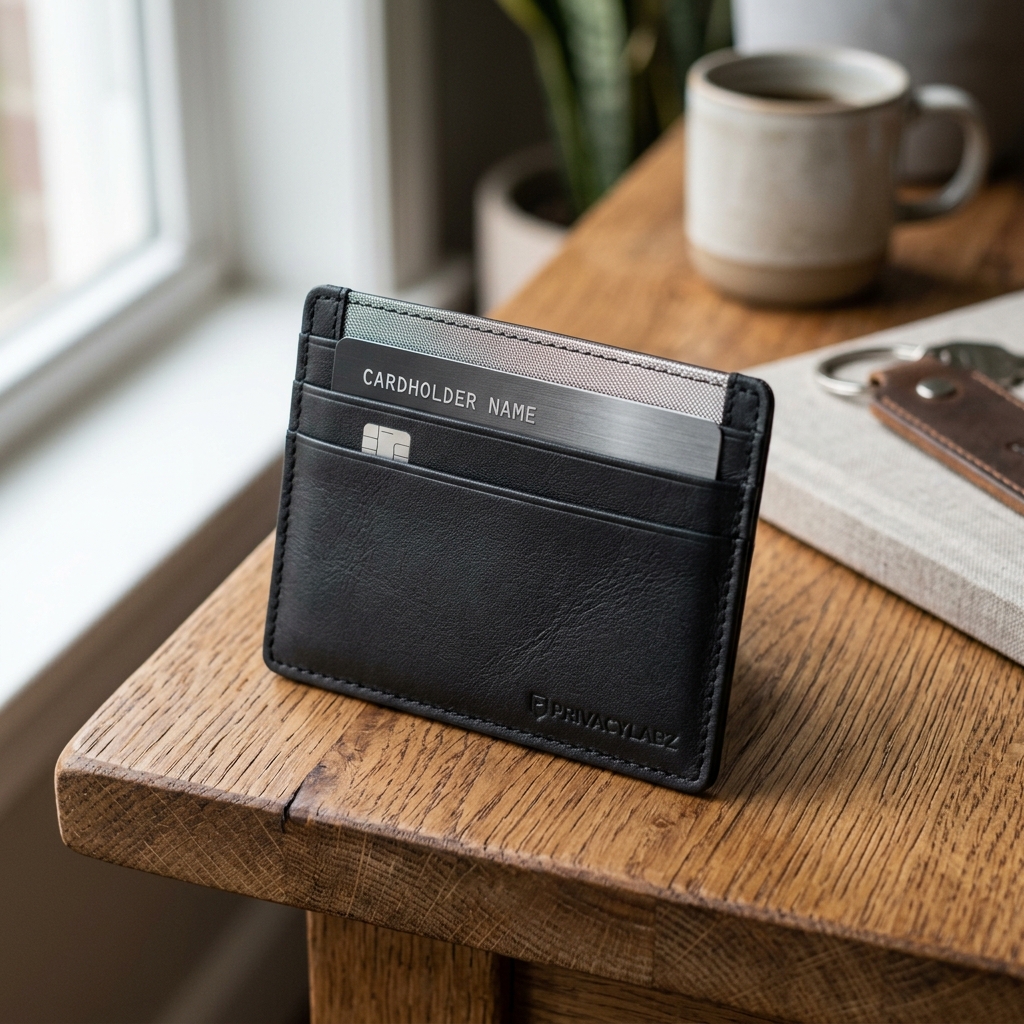
RFID-Blocking Wallet
How It Works
Shielding fabric or metallic barrier permanently laminated into the internal wallet lining.
Good For
Everyday use; protects all cards kept inside the shielded bill and card slots simultaneously.
Convenience
High — functions like a standard everyday wallet with zero extra operational steps.
Limitation
Only protects cards inside the shielded compartments; exterior quick-access tap pockets remain open.
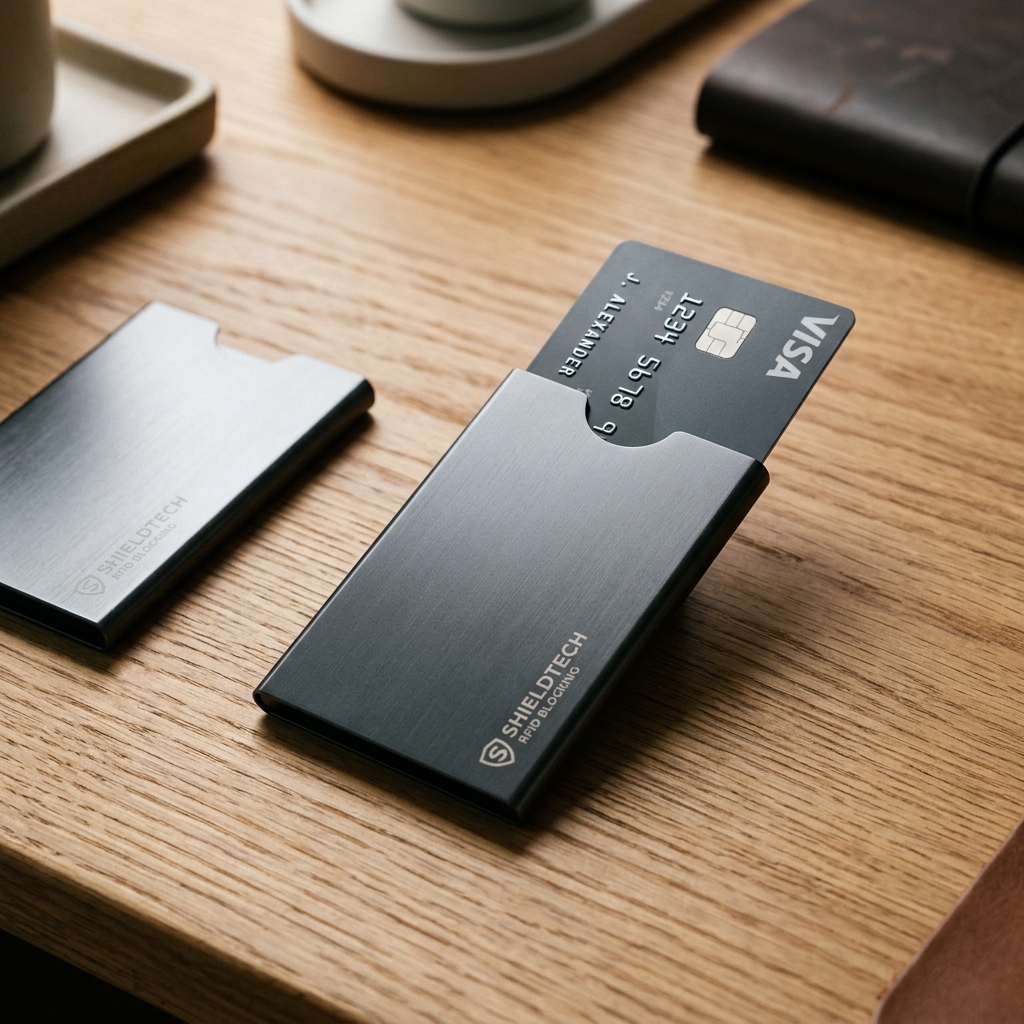
RFID Sleeve
How It Works
Individual paper-thin aluminum foil laminate envelope wrapped around a single card or passport.
Good For
Targeted protection for specific payment cards or passports without replacing your existing wallet.
Convenience
Moderate — requires manually slipping the card in and out of the sleeve for every transaction.
Limitation
Easy to forget to re-insert; susceptible to mechanical wear and tearing over extended use.
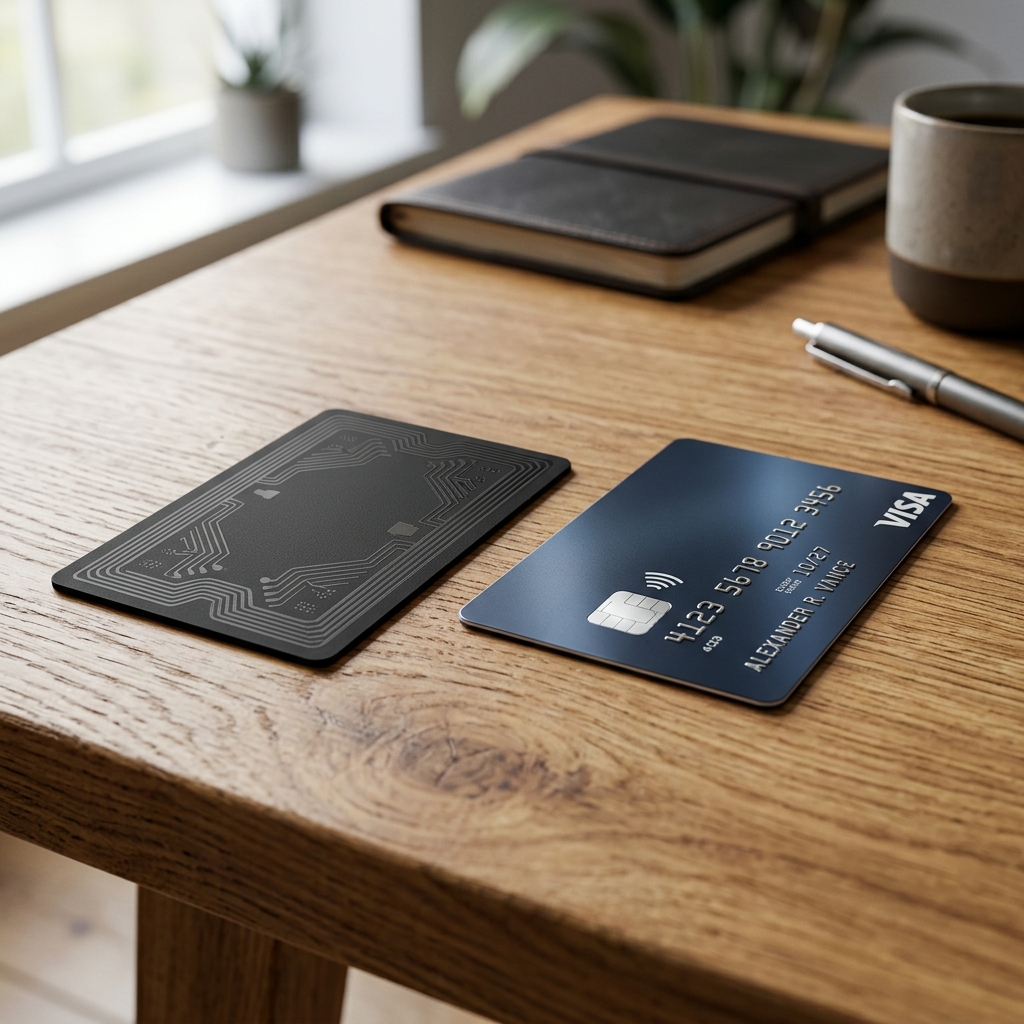
RFID Blocking Card
How It Works
Rigid credit-card-sized insert carried alongside payment cards (utilizing passive absorption or active interference).
Good For
Upgrading a favorite non-shielded leather wallet without altering everyday carrying habits.
Convenience
High — simple drop-in card requiring no behavioral changes during payment.
Limitation
Protective radius varies significantly by card position; active mechanisms are rarely transparently documented.
A specific caution on blocking cards: this category covers genuinely different mechanisms under one marketing term — some rely on simple passive absorption, while others market active interference or jamming without disclosing circuitry specifications. PrivacyLabz treats this category with caution until independent bench testing can verify active claims across varied card geometries.
RFID blocking vs. a Faraday bag
Related principles, different jobs. An RFID-blocking wallet or sleeve is usually purpose-built around a specific credential frequency — typically 13.56 MHz for payment cards and passports. A Faraday bag is typically built for broader RF attenuation across the frequencies phones, laptops, and key fobs actually use, which is a different (and usually wider) range than a single RFID frequency.
They share the same underlying electromagnetic shielding principle, but the distinction that matters practically is purpose, frequency coverage, and construction — a product good at one isn’t automatically good at the other. See Faraday Bags: The Complete Guide for the device-isolation side of this.
How can you tell whether RFID blocking works?
For a contactless card, a simple functional check can quickly identify an ineffective product. However, it is vital to understand the limits of what a home test actually demonstrates.
1
Place / Enclose
Place your contactless card securely inside the shielded wallet compartment, foil sleeve, or beside the blocking card.
2
Test Tap
Attempt a normal tap-to-pay transaction at a transit fare gate or retail payment terminal with the card fully enclosed.
3
Interpret Carefully
A blocked transaction confirms near-field attenuation for that specific reader, but does not measure laboratory multi-angle dB attenuation.
Do not repeat transactions in ways that trigger card issuer fraud blocks or merchant disruption. A single, controlled check is sufficient to catch an unshielded or defective product.
Articles & Guides
In-depth technical explainers, buyer guides, and testing protocols in the RFID Blocking cluster.
Data corroborated across telecommunications standards, patent records, and academic research:
GS1 GO Customer Service Portal:“What is the difference between low, high, and ultra-high frequencies?” — Standards documentation for LF, HF (13.56 MHz), and UHF (860–960 MHz) operational bands and read range limits.
Smart Pipe System for a Shipyard 4.0 (arXiv): Research reference on ITU frequency bands, inductive coupling ranges, and operational differences between near-field HF and far-field UHF.
ISO/IEC 14443 Standard: Identification cards — Contactless integrated circuit cards — Proximity cards at 13.56 MHz, specifying inductive power requirements and proximity read boundaries.
USPTO Patent Documentation (ISO/IEC 14443 & ICAO 9303): Technical specifications for biometric electronic passport RFID chips and contactless cryptographic handshake standards.