Home / RFID Blocking / Wallets
// RFID BLOCKING WALLETS
RFID Blocking Wallets: What to Look For & Which Ones Stand Out
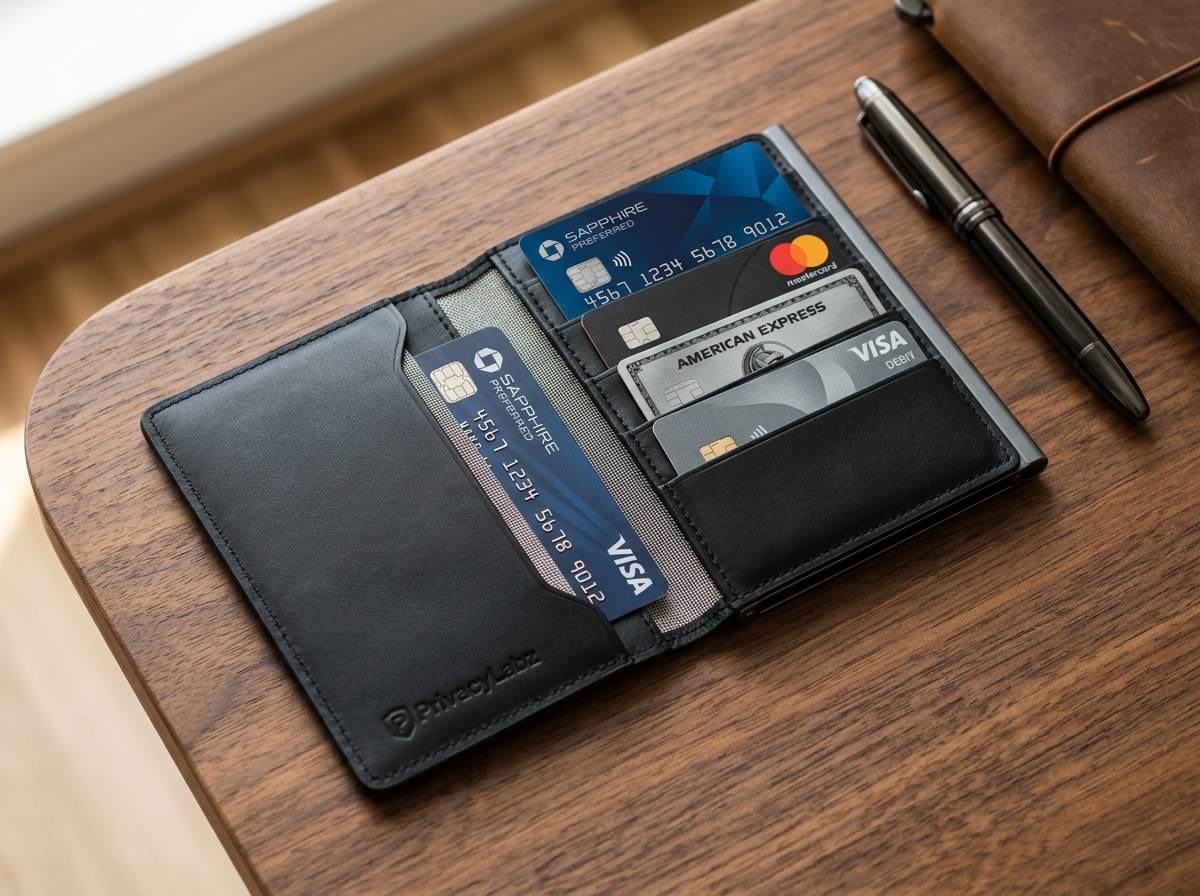
An RFID-blocking wallet incorporates conductive shielding material directly into its billfold, card slots, or exterior shell to attenuate wireless communication between your contactless cards and an external reader.
They are engineered specifically for 13.56 MHz High-Frequency (HF) contactless payment cards and biometric credentials — not broadband device isolation or legacy 125 kHz building access fobs. While physical shielding reliably prevents proximity interrogation when properly constructed, implementation quality varies widely across brands.
Whether you prefer a minimalist aluminum cardholder or a classic leather bifold, protection depends on continuous material coverage and closure fit. This guide examines how wallet shielding works, what design trade-offs matter in daily carry, and which models deliver verified construction.
At a glance
What it's forShielding compatible contactless cards and credentials (13.56 MHz HF) from nearby RF communication
What mattersShielding coverage, internal liner construction, closure geometry, and everyday usability
What it doesn't stopOnline card fraud, database breaches, physical theft, ATM/terminal skimming, or magnetic-stripe fraud
AlternativesIndividual RFID foil sleeves, standalone blocking cards, or non-shielded wallets with tokenized mobile pay
Affiliate Disclosure: PrivacyLabz may earn a commission from qualifying purchases. This does not affect the price you pay, nor does it influence our editorial evaluations.
RFID Wallets Worth Considering
There isn’t one universally “best” RFID wallet. Different designs make sense for different people, so we’ve focused on construction, format, capacity and how the RFID-blocking element is implemented.
01
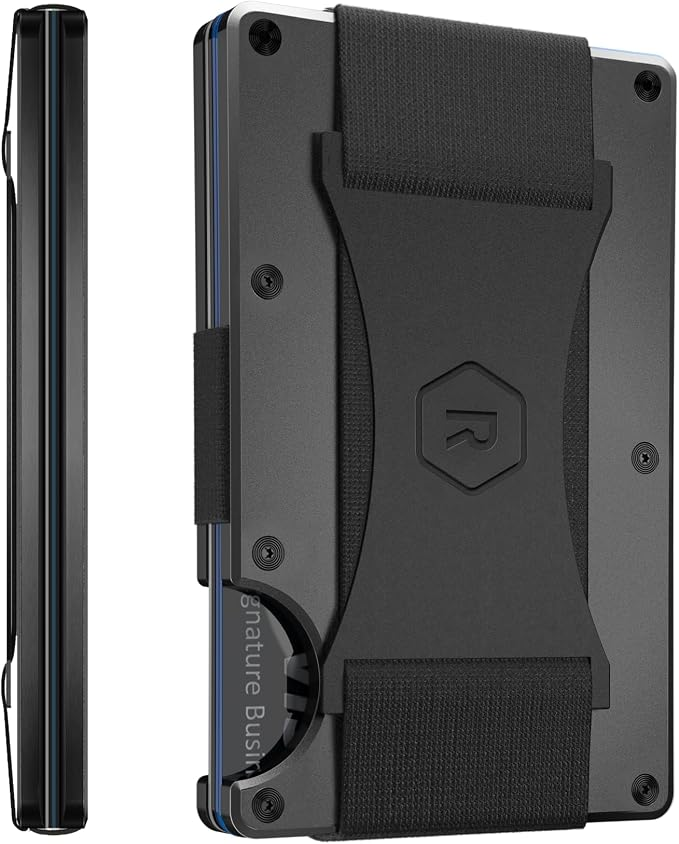
ALUMINUM CASE
AUTO-LOCKING
AS SEEN ON TV
WHAT WE LIKE
- Auto-locking mechanism, no fold-over flap
- Aluminum shell is real structural material
- Long retail history, not a newcomer
WATCH FOR
- No frequency or attenuation figure given
- Marketing leans on fear-based language
- Thinner evidence than category leaders
QUICK SPECS
- Material: Aluminum shell
- Capacity: Up to 8 cards + cash
- Mechanism: Auto-locking push-button latch
02
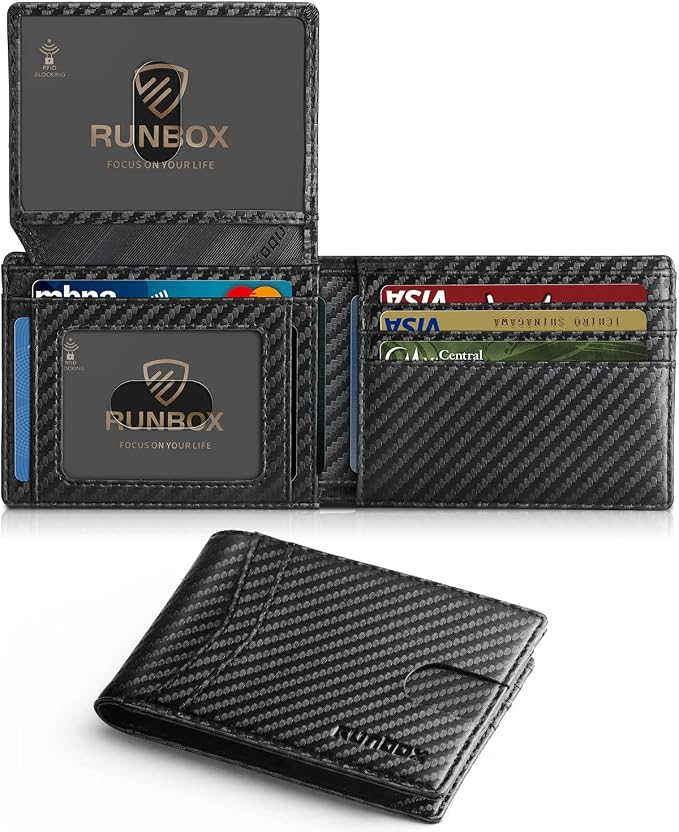
LEATHER BIFOLD
15 CARD SLOTS
#1 BEST SELLER
WHAT WE LIKE
- Real capacity: 15 slots, 2 windows
- States an actual frequency: 13.56 MHz
- Established brand, extensive review history
WATCH FOR
- Still just a manufacturer claim, unverified
- "Or higher" adds little practical value
QUICK SPECS
- Material: Leather + metal composite lining
- Capacity: 15 slots + 2 ID windows
- Claimed range: 13.56 MHz or higher
03
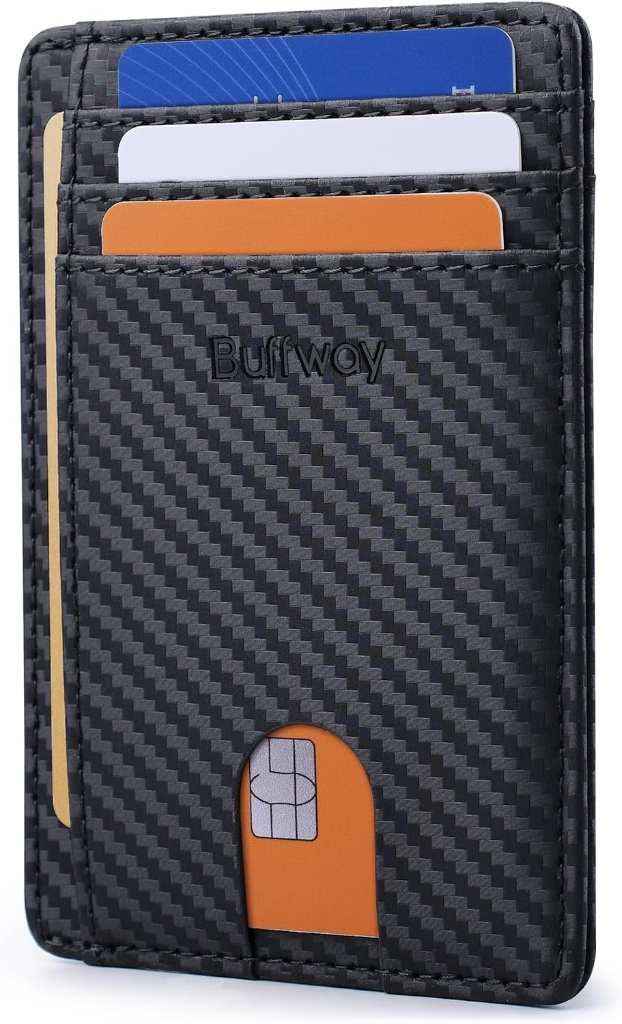
SLIM PROFILE
FRONT POCKET
WHAT WE LIKE
- Genuinely ultra-thin: 1/8 inch empty
- Massive review base, 115,000+ ratings
- Smart layout: 8 slots, clear ID
WATCH FOR
- Same generic claim as RUNBOX uses
- No frequency or attenuation figure given
QUICK SPECS
- Material: Faux leather
- Capacity: 8 slots (cards, ID, cash)
- Weight: 1.05 oz
04
PREMIUM TIER
CASH STRAP
WHAT WE LIKE
- Genuinely rigid aluminum, full enclosure
- Lifetime guarantee on straps and screws
- Holds 1–12 cards, no stretching
WATCH FOR
- Priciest wallet in this comparison
- Still no frequency or dB figure
QUICK SPECS
- Material: 6061-T6 anodized aluminum
- Capacity: 1–12 cards + cash strap
- Weight: 1.5 oz
05
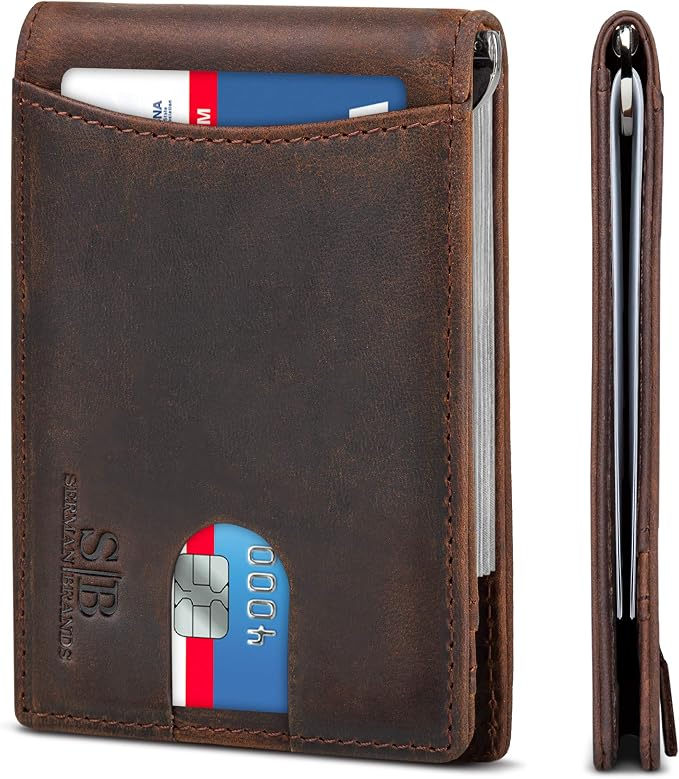
GENUINE LEATHER
MONEY CLIP
WHAT WE LIKE
- Full-grain leather, patented bifold design
- Quick-access ID window plus money clip
- Names a testing institute, unusually specific
WATCH FOR
- Identical wording to RUNBOX's listing
- Institute named but not identified
QUICK SPECS
- Material: Full-grain leather
- Capacity: 6–8 cards + cash
- Warranty: 12 months
Editorial Note // Shared Manufacturer Claims
Several wallets in this category use identical manufacturer marketing language for their RFID claims, which usually indicates a shared component supplier rather than distinct in-house technology. That doesn’t make the shielding ineffective — it simply means the claim originates from a single supply chain source repeated across multiple retail brands, rather than being independently developed or verified by each seller.
How RFID-blocking wallets work
Contactless credit cards, debit cards, and biometric documents communicate via passive near-field radio frequency identification at 13.56 MHz (governed by the ISO/IEC 14443 standard). Because these cards lack an internal battery, they rely entirely on electromagnetic induction: when placed within a few centimeters of an active payment terminal, the reader’s alternating magnetic field induces an electrical current in the card’s internal antenna coil, powering the microchip long enough to transmit credential data.
An RFID-blocking wallet interferes with this process by creating an electromagnetic barrier. By laminating conductive materials — typically flexible nickel-copper mesh, woven metallic fibers, or thin aluminum foil — beneath the leather or fabric layers, the wallet forms a localized attenuation shield. When an external radio frequency field encounters this conductive barrier, charges redistribute across its surface, reflecting and absorbing the electromagnetic energy before it can induce sufficient voltage in the card’s antenna to wake the chip.
However, “RFID blocking” is not a universal shield across all wireless frequencies. A wallet engineered to block 13.56 MHz payment cards will not automatically attenuate low-frequency (125 kHz) legacy building access fobs, nor will it block high-frequency cellular (800 MHz–3.5 GHz), Wi-Fi, or Bluetooth signals emitted by phones. For multi-frequency device isolation, see our guide to full-spectrum enclosures.
Read our complete RFID Blocking Guide →
Claim Check
“The latest RFID-blocking technology”
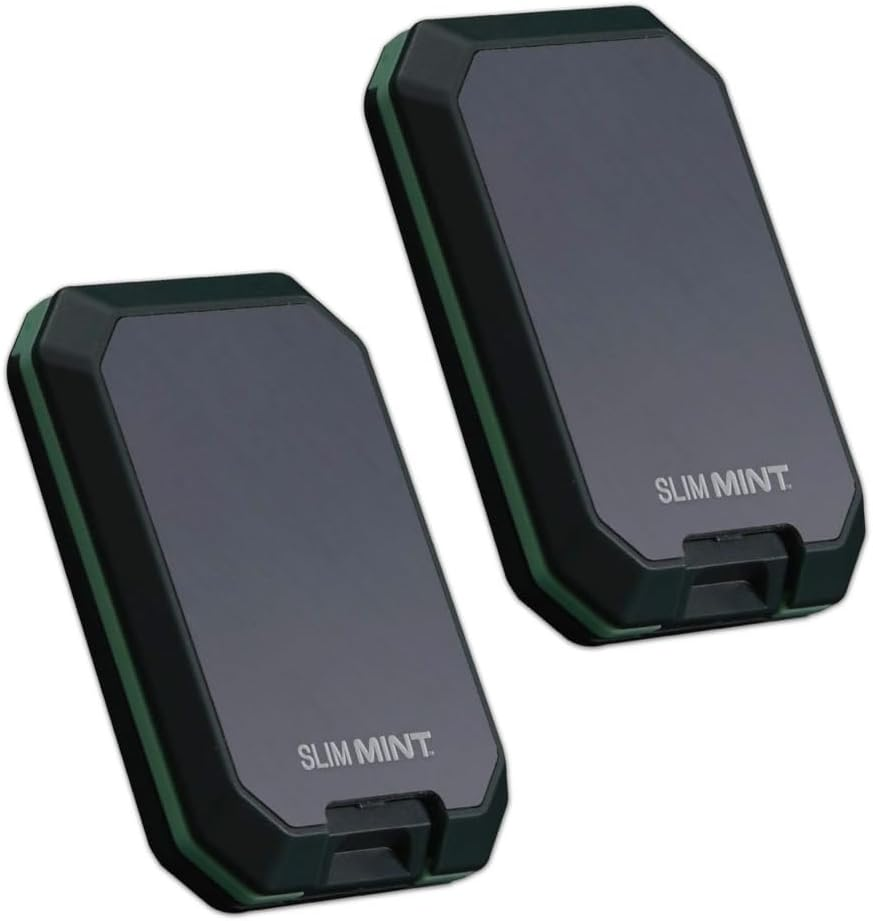
This is the actual claim on the Slim Mint Wallet’s own marketing — no frequency, no attenuation figure, no test method, just “latest.” “Latest” describes recency, not performance; it tells you nothing about which frequencies are covered or how well. Worth noting too: the same marketing leans on lines like “criminals can scan and hack your sensitive information without you even knowing” — a fear-based framing that doesn’t require a technical claim to work, which may be part of why the technical claim itself never got more specific. The aluminum construction is real. What that construction actually attenuates, and how well, isn’t specified anywhere we could find.
What actually matters when choosing an RFID wallet
Marketing often reduces wallet evaluation to whether a product has “RFID BLOCKING” printed on the box. In practice, four functional factors determine whether a wallet actually delivers reliable protection and daily satisfaction:
01 // Implementation
Shielding Coverage
Implementation matters far more than marketing claims. Many wallets only line the interior billfold fold or select card slots, leaving outer quick-access pockets completely unshielded. Verify whether shielding extends across every card slot or only designated interior compartments.
02 // Materials
Liner Construction
Flexible conductive textiles (woven nickel-copper or silver-coated polyester mesh) drape naturally inside leather without creating crinkling noise or stiff folds. In contrast, cheap foil laminates can fatigue, tear, and crack along fold lines with repeated pocket flexure.
03 // Geometry
Closure & Edge Coverage
Radio frequency signals can enter through unsealed apertures. A standard open bifold leaves the top edge exposed; while cards fully seated deep inside remain shielded, cards protruding near the margin experience less attenuation. Zippered or clasp closures ensure complete containment.
04 // Ergonomics
Everyday Usability
A wallet can have impressive shielding and still be an absolute brick in your pocket. Balance physical security with practical daily carry: card slot tightness during checkout, thickness when loaded with cash, and overall footprint in your preferred pocket.
RFID wallet vs. sleeve vs. blocking card
Shielded wallets are only one way to isolate personal credentials. Depending on your carry habits, individual sleeves or drop-in cards offer distinct operational trade-offs:
RFID-Blocking Wallet
How It Works
Shielding fabric or metallic barrier permanently laminated into internal billfold and card slots.
Good For
Everyday carry; protects all cards kept inside the shielded compartments simultaneously.
Convenience
High — functions identically to a standard everyday wallet with zero extra handling steps.
Limitation
Only protects cards inside the shielded compartments; exterior quick-access tap pockets remain open.
How It Works
Individual paper-thin aluminum foil laminate envelope wrapped around a single card or passport.
Good For
Targeted protection for 1–2 specific cards without replacing your existing non-shielded wallet.
Convenience
Moderate — requires manually sliding the card in and out of the sleeve for every transaction.
Limitation
Susceptible to creasing, mechanical tearing, and wear along paper-foil seams over extended use.
How It Works
Rigid credit-card-sized insert carried alongside payment cards (utilizing passive absorption or active jamming).
Good For
Upgrading a favorite non-shielded leather wallet without altering everyday carrying habits.
Convenience
High — simple drop-in card requiring no behavioral modifications during payment.
Limitation
Protective radius varies significantly by card position; active mechanisms are rarely transparently documented.
Do you actually need an RFID-blocking wallet?
PrivacyLabz approaches this question with technical rigor rather than fear-based marketing. Electromagnetic shielding is real, repeatable physics — placing a conductive barrier between a card and a reader demonstrably attenuates the radio signal. However, whether that shielding addresses a realistic, real-world criminal threat for you personally is a completely separate question.
Core Principle
“Does it work?” and “Do you need it?” are two completely different questions.
Modern payment cards are not passive magnetic stripes broadcasting raw cardholder data. They use EMV contact and contactless smart chips governed by sophisticated cryptographic protocols. When tapped against a reader, the chip negotiates a dynamic, one-time security cryptogram that cannot be reused for a second transaction. An unauthorized proximity scanner passing by your pocket cannot extract the 3-digit security code (CVV) printed on the back of the card, your billing zip code, or your account password.
Furthermore, real-world financial fraud statistics from consumer protection agencies and banking associations consistently reveal that payment card fraud overwhelmingly stems from online ecommerce database breaches, phishing scams, account takeover attacks, and physical skimming overlays installed directly on gas pump or ATM terminals. Contactless proximity skimming in public transit or crowds represents a vanishingly small fraction of reported fraud.
Why might you still want an RFID-blocking wallet? Three practical rationales remain valid:
- Unencrypted credentials: Some legacy 125 kHz building access cards, gym passes, and simple transit fobs lack modern chip cryptography, broadcasting static identifiers that can be captured and cloned.
- Preventing card clash: If you carry multiple contactless payment or transit cards together, tapping an unshielded wallet against a subway fare gate often results in a read error as both cards attempt to communicate simultaneously. An RFID wallet isolates interior cards, allowing an exterior quick-tap card to scan cleanly.
- Zero-effort precaution: For many users, choosing an RFID-shielded wallet costs virtually the same as an unshielded alternative and introduces zero daily friction. If the feature is integrated cleanly, carrying it provides peace of mind without operational penalty.
How to check whether an RFID wallet is blocking communication
You do not need a laboratory spectrum analyzer to catch an obviously defective or unshielded wallet. A simple consumer functional check can quickly confirm basic near-field attenuation:
1
Insert Card
Place a verified contactless payment card or active transit card deep into the wallet’s shielded card slot and close the wallet.
2
Test Tap
Hold the closed wallet directly against a retail payment terminal or transit turnstile reader where the card normally scans.
3
Interpret Result
If the reader beeps or detects a card, shielding is ineffective. If the terminal remains completely idle, near-field coupling was attenuated.
Crucial nuance: A functional tap test only confirms that signal reduction was sufficient to prevent that particular reader from powering that specific card under immediate test conditions. It does not measure laboratory decibel (dB) attenuation across varying angles, high-gain reader antennas, or multiple radio frequencies. For our broader home testing methodology across different shielding products, explore our testing walkthrough in How to Test a Faraday Bag at Home.
More About RFID Wallets
In-depth technical explainers, testing protocols, and related shielding guides across the PrivacyLabz cluster.
Sources & Technical References
Data and cryptographic specifications corroborated across industry standards bodies and regulatory agencies:
- ISO/IEC 14443 Standard: Identification cards — Contactless integrated circuit cards — Proximity cards (13.56 MHz High Frequency), defining inductive power coupling boundaries and communication field strength limits.
- EMVCo Contactless Specifications: Architecture documentation governing chip cryptographic handshakes, dynamic CVV security cryptogram generation, and terminal transaction tokenization.
- Federal Trade Commission (FTC): Consumer reports and educational guidance on credit card skimming, identity theft vectors, and digital payment protections.
- GS1 GO Customer Service Portal: Technical standards defining operational frequency bands, field propagation differences, and read range limits between Low Frequency (125 kHz), High Frequency (13.56 MHz), and Ultra-High Frequency (860–960 MHz).
- Smart Card Alliance (Secure Technology Alliance): Security assessments and empirical evaluations analyzing the mechanics and real-world viability of contactless proximity skimming in public environments.