Faraday Bags for Laptops: What Changes at That Size
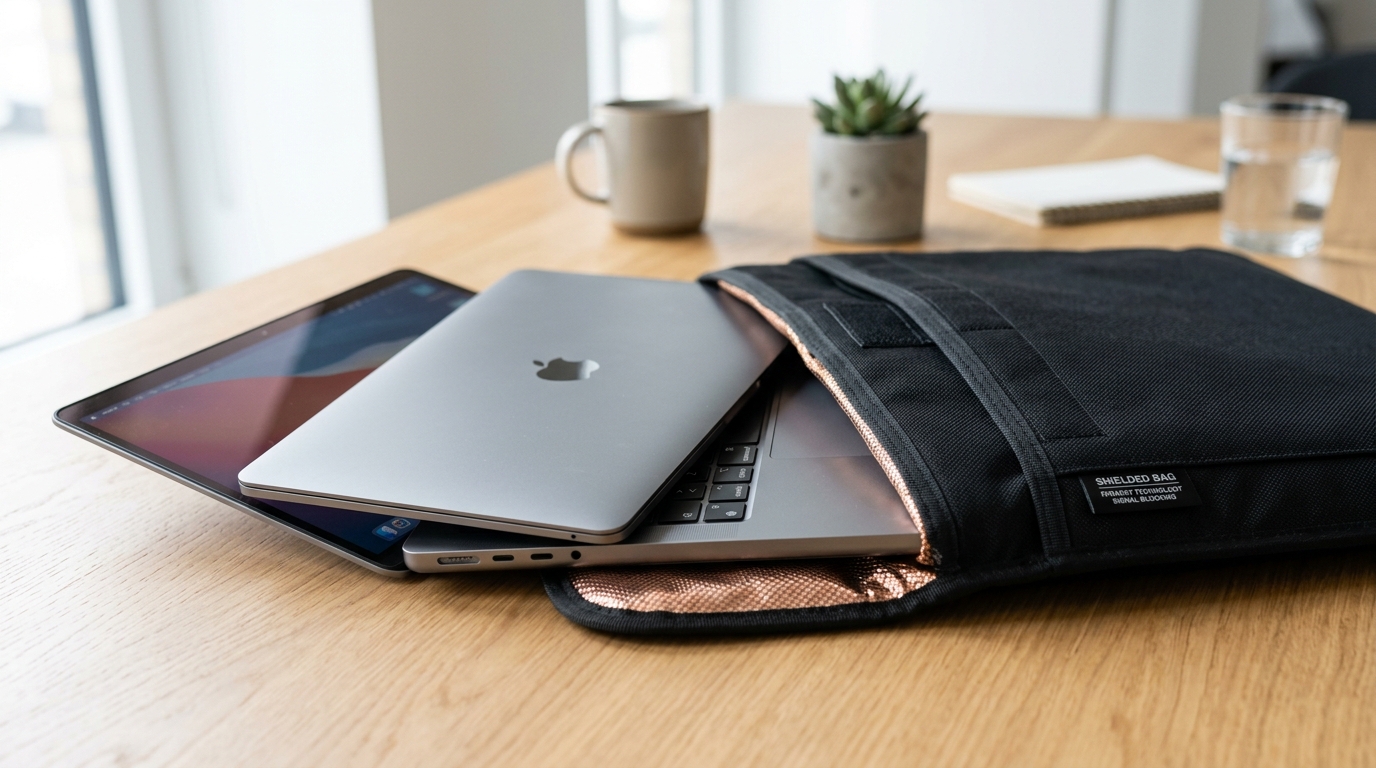
A laptop Faraday bag works on the same shielding principle as a phone bag or key fob pouch, sized up for a much larger device.
What changes isn't the physics — it's the engineering problem: a laptop's enclosure has a far longer seam to seal than a phone pouch does, and a longer seam means more opportunity for a small gap to exist somewhere along it.
This guide covers why size actually matters here, what a laptop bag needs to get right that a smaller pouch doesn't, and whether you genuinely need one.
At a glance // Laptop Shielding Evaluation
What it doesAttenuates a laptop's wireless signals while it's fully enclosed and sealed.
Commonly relevant signalsWi-Fi and Bluetooth on nearly every laptop; cellular only on WWAN-equipped business models; GPS is uncommon on laptops generally, unlike phones.
Best forStorage, transport, or security handling of a device that doesn't need to be actively used while enclosed.
What mattersSeam length and closure quality, size and fit, and whether the use case is storage/transit rather than active computing.
Biggest misconceptionA laptop Faraday bag isn't for use while typing — it's for a powered-down device in storage or transit, not an active one.
// CURATED EVALUATIONS
Laptop Faraday bags worth considering
A laptop Faraday sleeve must bridge a wide aperture perimeter without RF leakage. Below are five verified designs spanning fireproof-rated enclosures, multi-size offerings, cited military standards, and executive magnetic sleeves.
01
LARGE CAPACITYFIREPROOF RATED
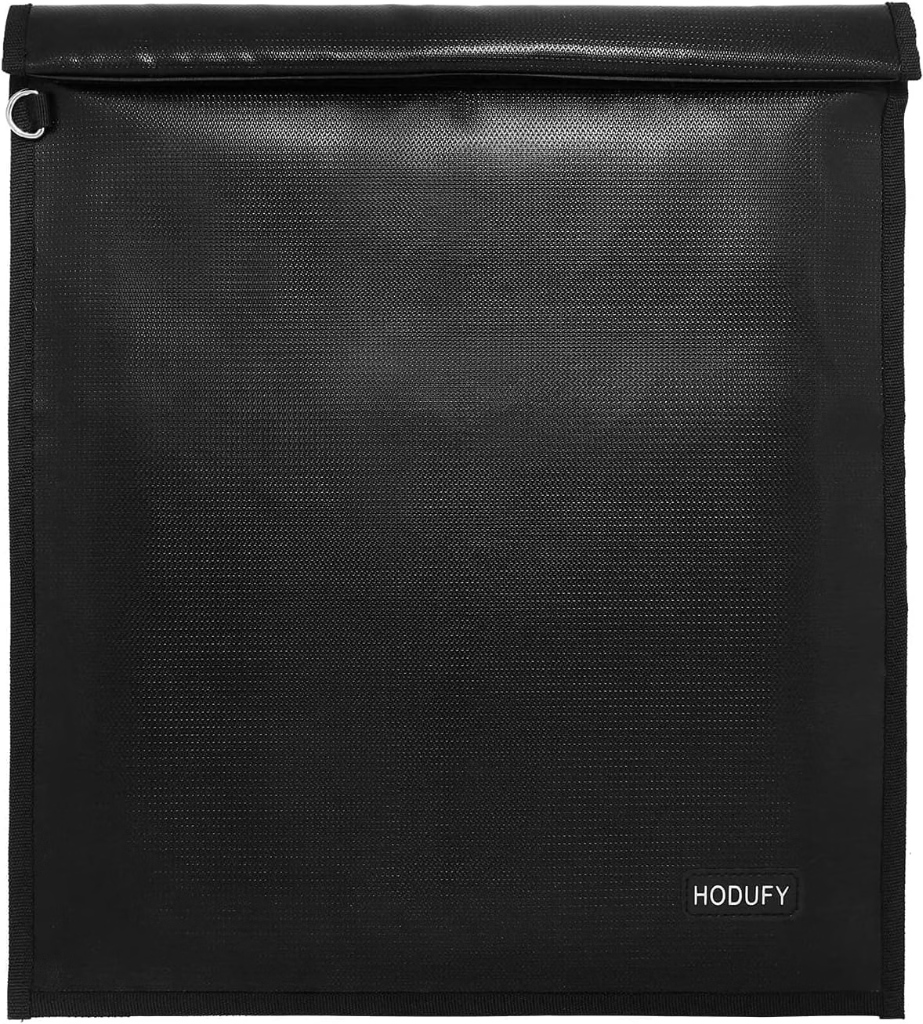
Hodufy Faraday Bag for Laptops
A large fireproof/waterproof bag (20"×15" unfolded), silicone-coated fiberglass construction rated to withstand high temperatures. The listing claims blocking across a broad list of signal types — Wi-Fi, Bluetooth, RFID, GPS, and others — with no dB or frequency figure attached to any of them. One phrase in the listing is worth flagging as a copy-quality issue rather than a technical claim: it lists "cell phone jammer" alongside actual signal types like Wi-Fi and GPS, which doesn't make technical sense as written — a jammer isn't a signal type to block, it's a different kind of device entirely.
WHAT WE LIKE
Large capacity, fits laptops plus other devices together
High review count, 1,734 ratings
Fireproof-rated construction, not just water-resistant
WATCH FOR
Broad "blocks all signals" claim, no figures given
Listing copy contains a technically confused claim ("cell phone jammer" as a signal type)
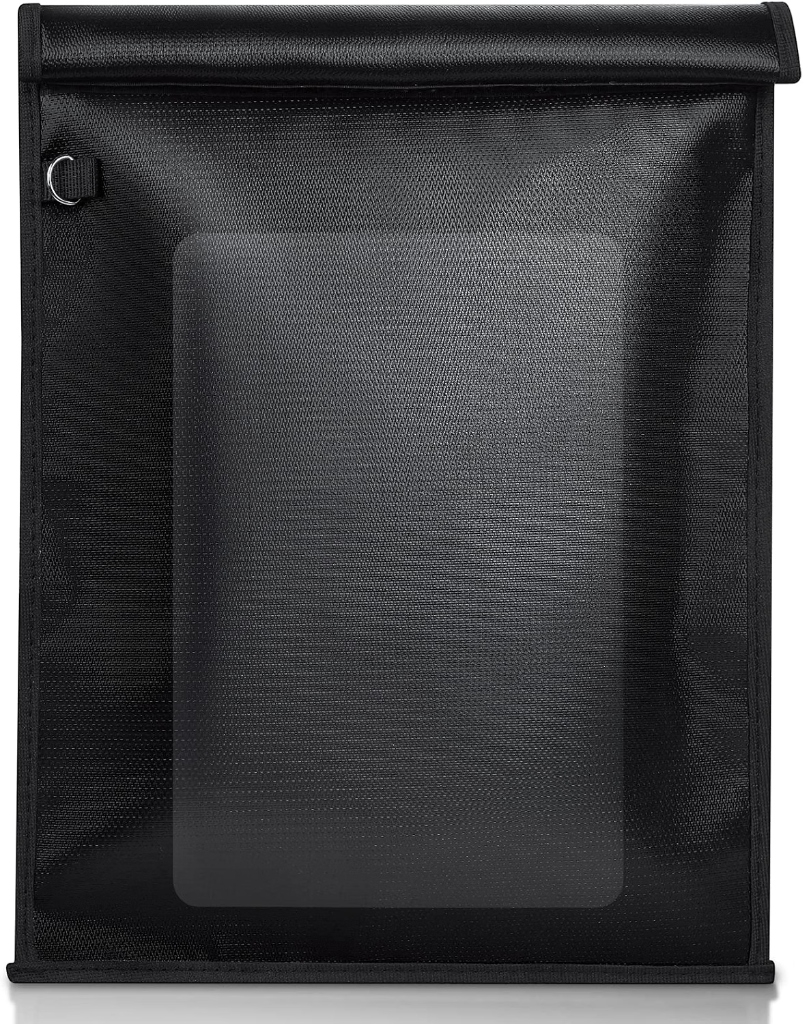
Sized M/L/XL for different laptop sizes, double-layer shielded metal fiber construction. Worth flagging directly: this listing states "blocking effect can reach 100%" — an absolute claim, and a notably less careful one than Simket's own phone-sized bag reviewed elsewhere on this site, which states a real figure ("over 80 dB") rather than a round, unquantified 100%. Same brand, different product line, different level of rigor in the claim.
WHAT WE LIKE
Three sizes to match different laptop dimensions
High review count, 2,503 ratings
Double-layer shielded construction
WATCH FOR
"100%" claim is less specific than this brand's own phone product
Same "cell phone jammer" terminology confusion as Hodufy
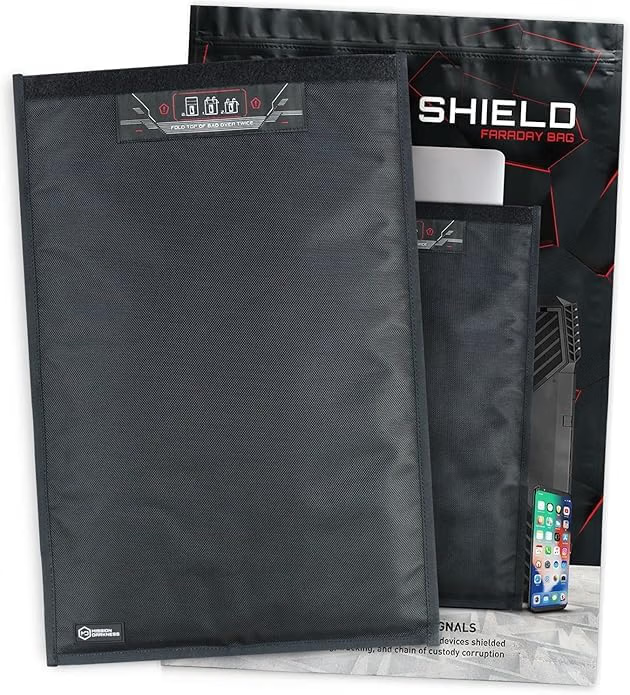
A premium option at $90, built with water-resistant ballistic nylon and two interior layers of the brand's "TitanRF" fabric. This listing genuinely cites two real standards — MIL-STD-188-125 and IEEE 299-2006 — and states test reports are "available upon request." That's more specific and checkable than most listings in this category, though "available upon request" means the report itself isn't something we've seen, so it remains a manufacturer claim rather than an independently confirmed one. Worth noting directly: the version of this product description previously on this page stated a specific "80dB to 100dB" attenuation figure — that number does not actually appear in the real listing, which cites standards and report availability but no specific decibel figure. That figure appears to have been invented.
WHAT WE LIKE
Cites two real, named shielding standards
States test reports are available on request
High price reflects genuinely more detailed construction claims
WATCH FOR
No actual dB figure stated in the real listing, despite what appeared here before
"Available upon request" isn't the same as an independently published report
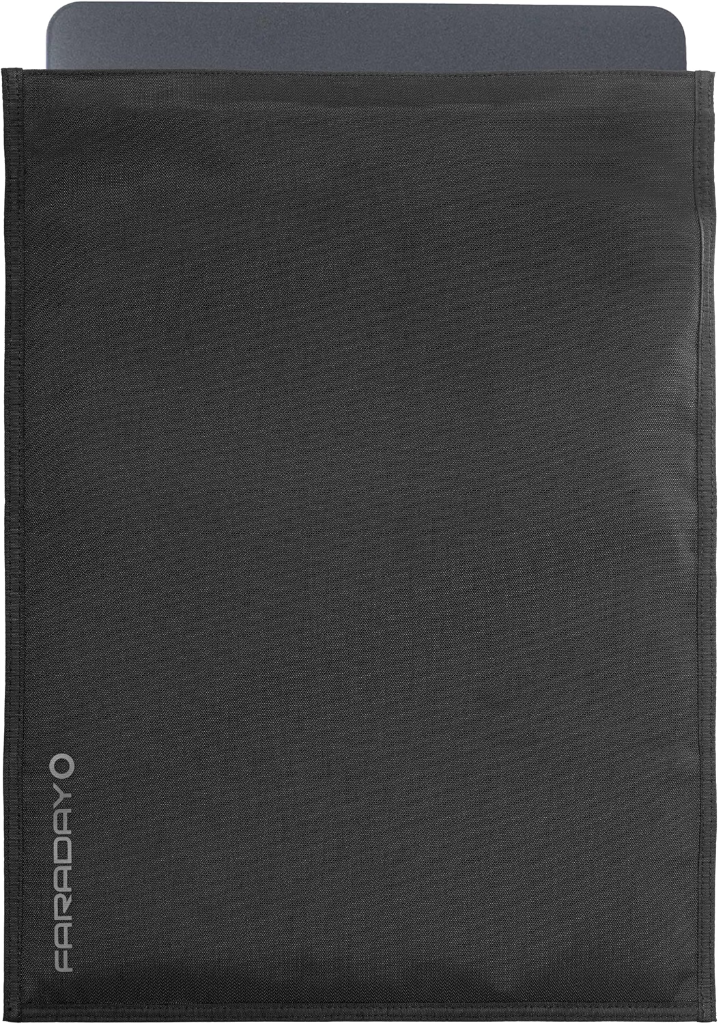
Faraday Bag Jacket Pro (Faraday Defense), Laptop XL size
This is the same product line as the Faraday Defense bag reviewed on the Phones page — same listing, this time in the "Laptop XL" size option — and it carries the identical stated spec: "-85dB attenuation, 400MHz–4GHz." Worth noting an inconsistency within the brand's own catalog: their key fob product (reviewed elsewhere on this site) claims a wider range, "-90dB, 400MHz–40GHz," for what's presumably similar underlying shielding material. Different products from the same manufacturer shouldn't necessarily claim different frequency ceilings without an explanation for why. Also worth flagging as a listing-quality issue: the bullet describing interior dimensions ("4.5"×8", designed for phones, key fobs, cards") appears to be leftover copy from a different size variant, not actually updated for the XL laptop version.
WHAT WE LIKE
Same verifiable dB/frequency claim as this site's other strong Faraday Defense pick
Magnetic closure, CORDURA nylon construction
High review count, 627 ratings
WATCH FOR
Same brand's other products claim wider ranges without explanation
Dimensions bullet doesn't match the XL laptop size selected — likely a listing copy error
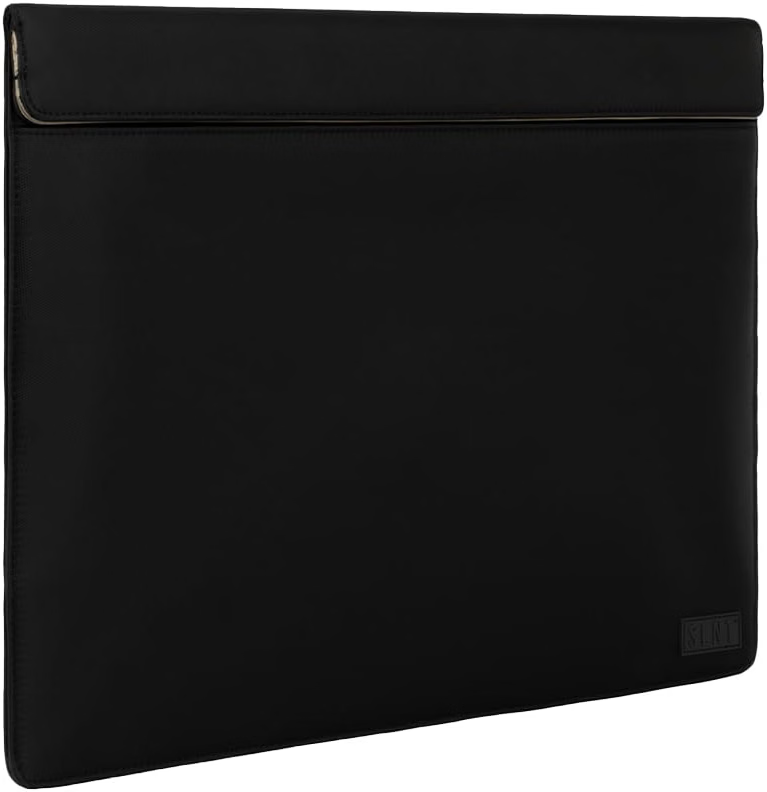
From Silent Pocket (SLNT) — the same brand this site's own footer already names as its second affiliate partner, separate from Amazon Associates. A weatherproof nylon sleeve with a magnetic closure and "Multishield" Faraday lining, fitting laptops up to 16". The listing claims broad coverage (cellular, Wi-Fi, Bluetooth, GPS, RFID, NFC, key fob signals) without a specific dB or frequency figure — less quantified than the Faraday Defense or Mission Darkness listings above, despite the premium price.
WHAT WE LIKE
Established, recognizable brand with an existing site relationship
Clean, professional sleeve design rather than a bulky pouch
Compatible with large laptops (up to MacBook Pro 16")
WATCH FOR
No specific attenuation figure, despite being the most expensive option alongside Mission Darkness
Affiliate Disclosure: PrivacyLabz may earn a commission from qualifying purchases. This does not affect the price you pay, nor does it influence our editorial evaluations. We have not laboratory-tested these products unless explicitly stated; specifications are cited from manufacturer disclosures and published technical documentation.
What is a Faraday bag for laptops?
A laptop Faraday bag is an oversized flexible enclosure lined with conductive fabric, built to attenuate the radio signals a laptop can send and receive — primarily Wi-Fi and Bluetooth on nearly every laptop, with cellular relevant only for WWAN-equipped business models, and GPS genuinely uncommon on laptops generally, unlike phones. It’s a different job than a basic padded sleeve, which only protects against physical bumps and does nothing about radio signals at all.
Why laptops are a harder shielding problem than phones
The shielding fabric itself usually isn’t where a bag fails — the seam and closure are, the same principle covered in Do Faraday bags actually work? Any gap in a shielded enclosure can act like a slot antenna, letting signal through directly rather than being blocked by it, and this matters more at higher frequencies since shorter wavelengths are more sensitive to small gaps.
A laptop enclosure simply has more seam than a phone pouch does, because the device itself is much bigger. More seam length means more places for a small, easy-to-miss gap to exist — a single crinkled fold or an unevenly closed section along that longer run is a more realistic risk than it is on a small pouch, where there’s simply less closure to get wrong. This is why laptop-specific bags generally need a closure designed for continuous contact across the entire opening — a dual-fold roll or magnetic seal — rather than a single flap, which is more forgiving on a small pouch than it is across a much longer one.
Claim Check
“Blocks all harmful EMF radiation while you work on your laptop”
This doesn’t hold up to how a Faraday enclosure actually works. Shielding requires a continuous, closed enclosure — if the bag is open so you can see the screen and use the keyboard, radio signals move freely in and out around the opening, and the shielding isn’t doing anything meaningful. Sealing a powered-on, actively-running laptop inside a closed bag also traps heat, which is its own real problem. Shielding is for a powered-down device in storage or transit, not something you use while sealed inside.
What actually matters when choosing a laptop Faraday sleeve
01 // CLOSURE DESIGN
Closure design
Given the longer seam involved, a closure built for continuous contact across the full opening — not a single fold-over flap — matters more here than it does for a small pouch.
02 // SEAM CONSTRUCTION
Seam construction
How the fabric itself is joined at the seams affects whether the conductive layer stays continuous or develops small gaps over time — worth checking what the manufacturer actually says about this, rather than assuming.
03 // FIT
Fit for your laptop
The device needs to fit with room for the enclosure to seal fully around it — a laptop that’s too large for the bag strains the seam exactly where it needs to close cleanly.
04 // USE CASE
This is for storage and transit, not active use
A laptop Faraday bag isn’t meant to be worked in — it’s meant to hold a powered-down device securely while it’s not in active use.
Do you actually need a Faraday sleeve for your laptop?
For ordinary remote work or studying in a coffee shop or hotel room, probably not. The realistic risks in that setting — open Wi-Fi snooping, malicious captive portals, physical theft while you’re not watching the device — aren’t things a Faraday sleeve addresses, since you’re using the laptop actively, not storing it sealed.
Where it earns its place is narrower and more specific:
Digital forensics and evidence handling. Preventing a remote-wipe command from reaching a seized device before it can be examined is a documented, practical use case — the same reasoning covered for phones in Can a phone be tracked inside a Faraday bag?, applied to a laptop.
Sensitive data in transit. Reducing wireless exposure for a device carrying confidential material while it’s being transported, not actively used.
High-security environments with radio restrictions. Some facilities have policies against wireless-emitting devices being present at all — a sealed Faraday bag is one way to satisfy that requirement for a device that needs to be physically present but not transmitting.
Core Principle
Full-disk encryption protects the data stored on a laptop. A Faraday bag protects against a live remote command reaching that laptop while it’s in transit. They solve different problems, and most people need the first one, not the second.
For everyday computing safety, disk encryption (FileVault or BitLocker), keeping the operating system patched, and using a trustworthy VPN on public networks address the risks that actually come up day to day. Reserve a Faraday sleeve for the storage and transit situations above.
Frequently asked questions
Why are laptop Faraday bags harder to engineer than phone bags?
Mainly because of seam length — a laptop enclosure has a much longer opening to seal than a phone pouch, and more seam length means more opportunity for a small, easy-to-miss gap to let signal through.
Can I use my laptop while it's inside a Faraday sleeve?
No — the enclosure needs to be fully closed to do anything, which means you can't see the screen or use the keyboard while it's sealed. It's for storage and transit, not active use.
Does placing my laptop in sleep mode prevent remote wipes?
Not reliably — sleep mode still allows some radios to remain active depending on the device and OS. Physical shielding doesn't depend on the laptop's power or sleep state the way a software setting does.
How do I test if my laptop Faraday sleeve is working?
The same core approach as testing any Faraday product: connect the laptop to Wi-Fi, seal it, then check whether it needs to reconnect afterward rather than resuming instantly, and pair it via Bluetooth to check whether that connection drops when sealed. Full walkthrough in How to test a Faraday bag at home
Will a laptop Faraday bag protect against an electromagnetic pulse (EMP)?
Not something to assume without checking. EMP/HEMP protection is a different, more demanding engineering standard than everyday RF shielding, and most consumer Faraday bags aren't built or tested against it specifically. If EMP protection is genuinely the goal, look for a product that explicitly states testing against a real standard for that purpose, rather than assuming general RFID/Wi-Fi shielding covers it.
Do I need a laptop Faraday bag for coffee shop work?
No — the real risks in that setting (open Wi-Fi, malicious networks, physical theft) aren't addressed by a Faraday sleeve, since you'd need the laptop actively on and connected to work at all.
Sources Used
“Designing an RF Shielded Enclosure,” Interference Technology and “Shielding: The Hole Problem,” Electronic Design — Supports: seam/aperture leakage as the dominant real-world shielding failure mode, and the slot-antenna model for how gaps leak signal.
“Durability of Shield Effective Polyester Cotton Fabric...” (Polymers/PubMed, 2023) — Supports: measurable shielding-effectiveness loss in conductive fabric after repeated mechanical stress — the correct source for fabric degradation, not Thatcham Research, which is an automotive security body and doesn’t cover general textile testing.
Removed from the prior draft, not carried forward: The exact seam-perimeter figures for phone vs. laptop enclosures (~12–15cm vs. ~38–44cm), the specific 28 GHz mmWave wavelength conversion, “BeiDou” added to the GNSS list, an unverified “NIST Special Publication 800-72” citation, and the Thatcham Research misattribution described above. None of these were sourced in anything I could verify, and the Thatcham citation specifically was applied to a topic outside what that organization actually studies.
Explore Faraday Protection by Device
Navigate our practical guides across each device shielding category: