Faraday Bags for Travel: Matching the Shielding to What You’re Carrying
Travel changes what's actually worth shielding, and what kind of shielding it needs.
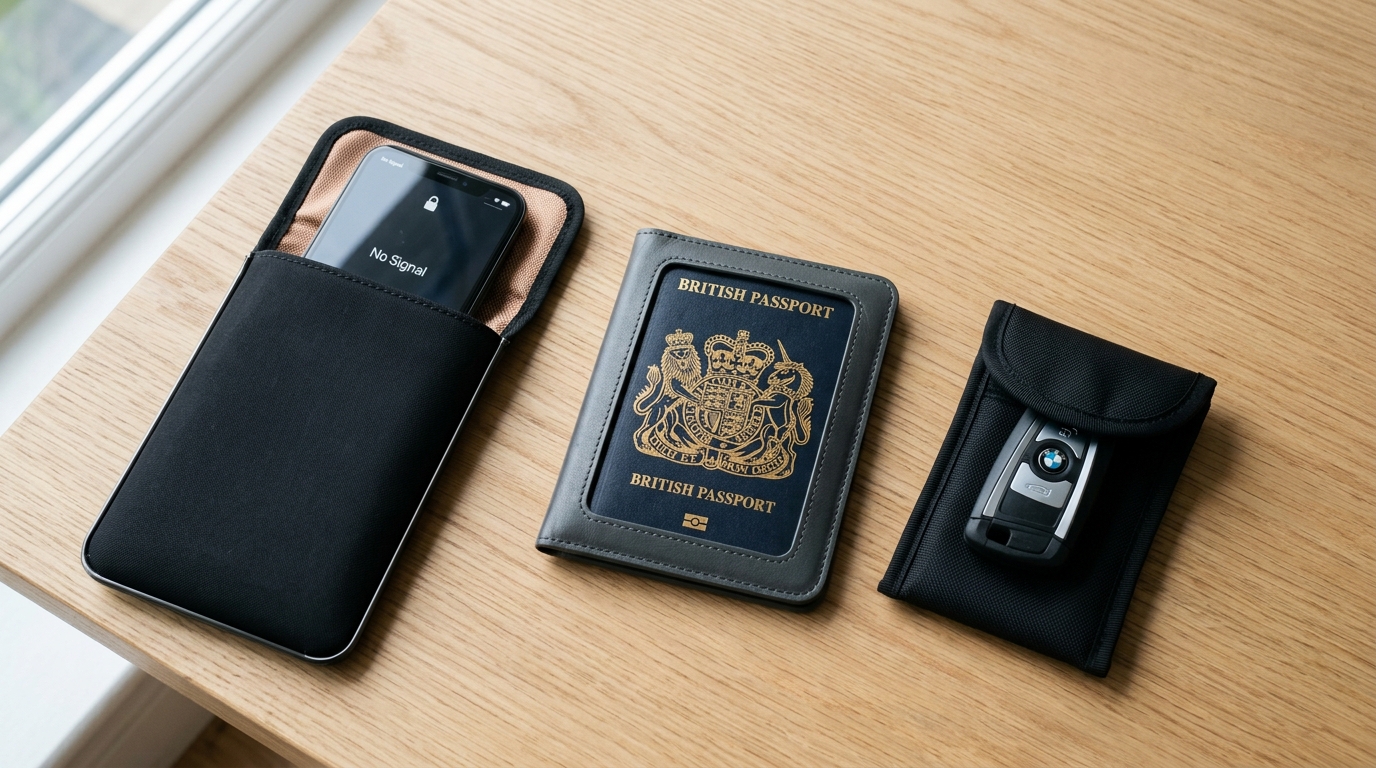
A typical trip involves several different things that transmit or hold a signal — a phone, possibly a laptop, a passport with an embedded chip, contactless cards — and they don't all need the same kind of protection. A broadband device (phone, laptop) needs a Faraday enclosure built for a range of frequencies; a passport or card needs RFID-specific protection for one narrow frequency, not a general “signal blocking” product.
This guide covers what actually needs shielding while traveling, when it's genuinely useful, and when it's more than the situation calls for.
At a glance // Travel Shielding Evaluation
What it doesPhysically isolates a device while it's sealed inside.
Not the same asRFID passport/card protection — different frequency, different product.
Best forSpecific situations, not a blanket travel upgrade.
What mattersMatching the shielding to the actual device.
Biggest misconceptionDoesn't exempt you from airport or customs screening.
// CURATED EVALUATIONS
Travel Faraday gear worth considering
Travel security demands modularity: keeping shielded devices isolated while accessing boarding passes and cash instantly. Below are five verified options spanning multi-device dry backpacks, modular slings, certified waterproof totes, and everyday RFID travel bags.
01
CITES EMP STANDARD30L CAPACITY
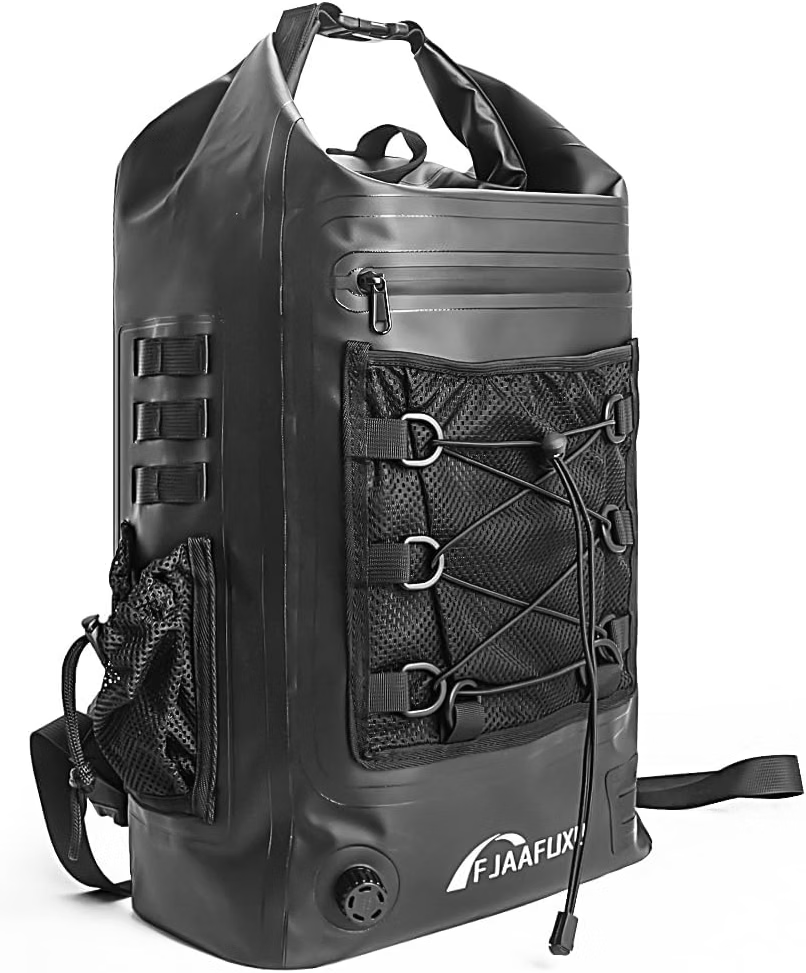
FJAAFUXD Faraday Travel Backpack Dry Bag
A 30L waterproof backpack (500D PVC exterior + shielding fabric interior) built for carrying electronics while traveling. Its "military-grade" claim is tied to a specific, real standard — MIL-STD-188-125-2, which specifically covers EMP/HEMP protection for transportable systems — making this a more relevant citation for its EMP-related marketing than most listings that use the word "EMP" without naming any standard at all. Still a manufacturer claim, not independently verified.
WHAT WE LIKE
Cites a real, specifically relevant EMP standard
Large 30L capacity for multiple devices
Dedicated interior pockets with their own shielding fabric
WATCH FOR
Broad "blocks everything" signal list, no per-signal figures
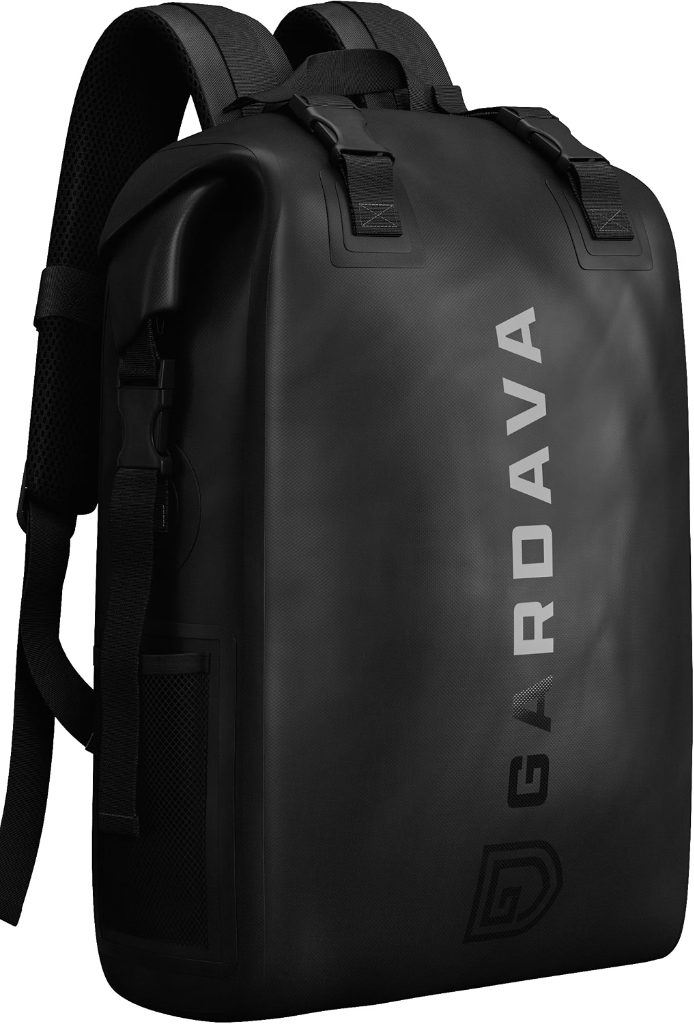
A waterproof Faraday backpack claiming "military-grade" protection and, notably, describing itself as "third-party tested" — a stronger-sounding claim type than most listings in this category, though no specific lab or report is named or linked, so it remains unverified despite the phrasing. Unlike the FJAAFUXD backpack above, this listing's EMP/military-grade language isn't tied to a specific named standard.
WHAT WE LIKE
Amazon's Choice badge
Claims third-party testing (though unverified)
Universal design fits laptops, phones, and key fobs together
WATCH FOR
"Third-party tested" names no lab or report
Low review count (18) relative to price point
"Military-grade" not tied to a specific standard, unlike similar competing products
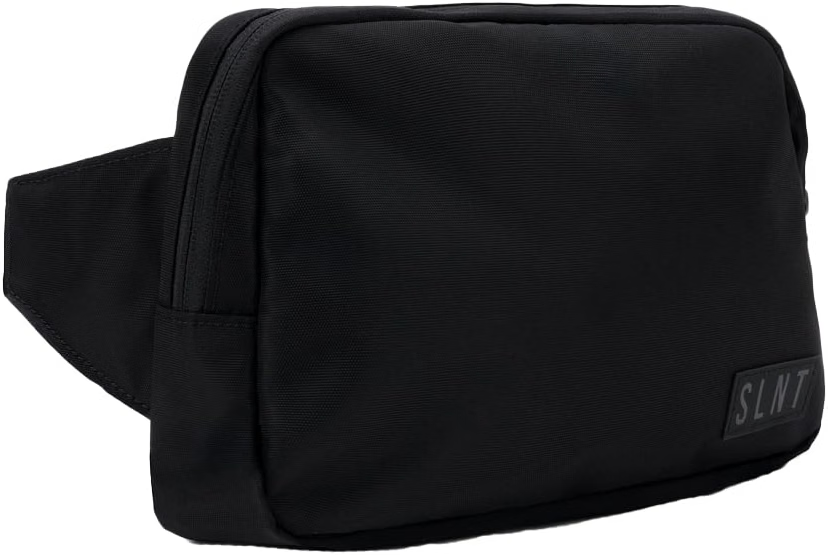
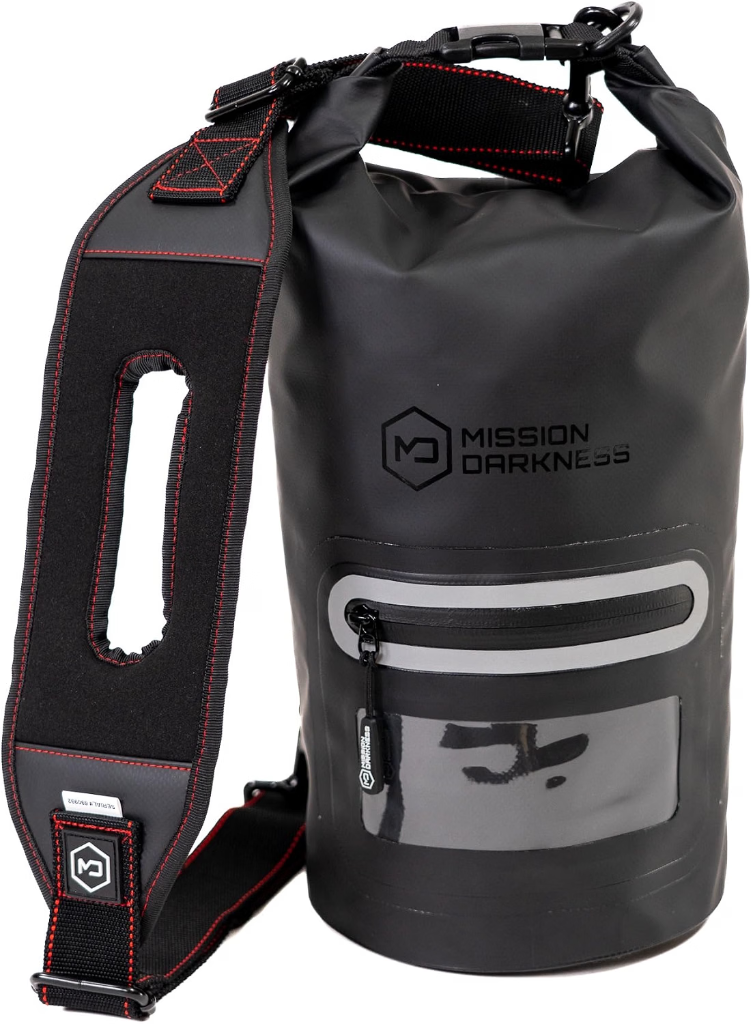
From Silent Pocket (SLNT) — this site's own named affiliate partner. Worth being precise about what's actually shielded here: this bag has three compartments, and only one — a dedicated "Multishield Faraday phone sleeve" — is actually shielded. The other two compartments (main pocket, front organizer) are ordinary unshielded storage for cards, cables, and accessories. This isn't a flaw, but it's an important distinction from a fully-shielded enclosure, and worth being clear about so a buyer doesn't assume the whole bag blocks signal.
WHAT WE LIKE
Recognizable brand, listed institutional users (military, government agencies)
Clear compartment separation between shielded and unshielded storage
Adjustable crossbody/waist strap for different carry styles
WATCH FOR
Only one of three compartments is actually shielded
A 7L waterproof tote using the same construction and same two cited standards (MIL-STD-188-125 and IEEE 299-2006, with test reports "available upon request") as the Mission Darkness laptop bag reviewed elsewhere on this site. Worth noting positively: this brand cites the same real standards consistently across its product line, rather than stating different, unexplained figures per product the way some competitors do.
WHAT WE LIKE
Same real, consistently-cited standards as this brand's other products
GENERAL TRAVEL BAGRFID FEATURE ONLY — CONSIDER REPLACING
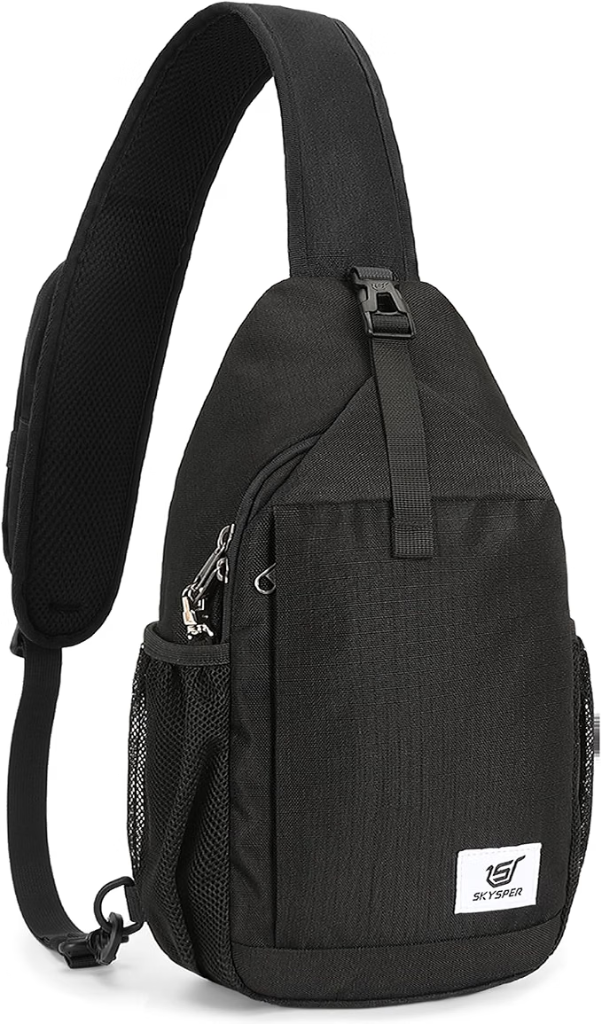
SKYSPER Sling Bag
Worth being upfront: this is a general-purpose recycled-fabric sling bag with RFID-blocking as one of several anti-theft features, not a dedicated Faraday device-shielding product like the other four on this page. It's a genuinely popular, well-reviewed everyday bag, but it doesn't do the same job as the rest of this lineup — it protects cards from proximity RFID reading, not a phone or laptop from broadband signal exposure.
WHAT WE LIKE
Very high review count, 1,721 ratings
Genuinely practical everyday travel bag
Recycled material, sustainability-conscious construction
WATCH FOR
Not a Faraday product — RFID card protection only, not device shielding
Category mismatch with the rest of this page's lineup
QUICK SPECS
Material: Recycled polyester
Feature: RFID-blocking pocket (one of several anti-theft features)
Affiliate Disclosure: PrivacyLabz may earn a commission from qualifying purchases. This does not affect the price you pay, nor does it influence our editorial evaluations. We have not laboratory-tested these products unless explicitly stated; specifications are cited from manufacturer disclosures and published technical documentation.
What actually needs shielding while traveling
A trip typically involves several different things worth thinking about separately, not as one undifferentiated “protect everything” problem:
Phone. Broadband shielding — cellular, Wi-Fi, Bluetooth, GPS — the same coverage discussed on Faraday bags for phones.
Laptop. Similar broadband shielding, mainly Wi-Fi and Bluetooth for most laptops, covered in Faraday bags for laptops.
Car key fob, if you’re carrying one — relevant specifically if it’s a passive-entry fob, covered in Faraday pouches for key fobs.
Passport. A completely different technology — a narrow 13.56 MHz RFID chip, not a broadband radio. This needs RFID-specific protection, not a general Faraday bag — see RFID blocking for passports for why this is a genuinely separate purchasing decision.
The important distinction: a broadband Faraday enclosure built for a phone or laptop isn’t automatically validated for a passport’s RFID chip, and vice versa. Don’t assume one product category covers everything in your bag.
Why airport and transit environments are a different radio environment
At home, a phone mostly talks to known cell towers, a trusted home Wi-Fi network, and paired Bluetooth accessories. In transit — busy airports, train stations, hotels — that environment is less predictable: unfamiliar networks, higher device density, and less certainty about what’s actually receiving your device’s signals. This is the general reasoning behind wanting a device to transmit less while it’s not actively needed during travel, without needing to assume every environment is actively hostile.
Claim Check
“Pass through airport security completely untracked”
This misunderstands what a Faraday bag actually does. It attenuates radio signals — it has no effect on physical security screening. Airport security relies on physical identity checks, boarding pass scanning, and X-ray screening of your belongings, none of which a Faraday bag changes. In fact, since shielding material blocks a scanner from seeing what’s inside, a sealed Faraday bag may need to be manually opened for inspection rather than cleared purely by X-ray — the opposite of avoiding scrutiny. A Faraday bag addresses wireless signal exposure in transit. It does nothing about physical screening or customs inspection authority.
What actually matters when choosing travel Faraday gear
01 // DEVICE MATCH
Match the product to the device
A phone/laptop enclosure and an RFID passport sleeve are different products solving different problems — don’t assume one covers the other.
02 // CLOSURE QUALITY
Closure quality
The same seam-integrity principle covered throughout this site — continuous contact along the full closure, not a single fold-over flap — matters as much for travel gear as any other Faraday product, arguably more given how often a travel bag gets opened and closed over a trip.
03 // ACCESSIBILITY
Practical accessibility
If you need quick access to a device at a checkpoint, a bag that’s genuinely awkward to open and reseal properly works against itself — people stop using gear that’s annoying to use correctly.
04 // RISK ASSESSMENT
Realistic assessment of what you’re protecting against
Not every trip calls for the same level of shielding — a domestic weekend trip and international travel with sensitive work material are different situations with different real needs.
Do you actually need Faraday bags when traveling?
For an ordinary domestic trip — a family holiday, a weekend away — carrying full Faraday protection for every device is usually more than the situation calls for. The realistic risks on a trip like that (physical pickpocketing, lost luggage) aren’t things radio shielding addresses at all.
Where it’s genuinely justified: carrying sensitive confidential documents or communications through specific higher-risk situations, transporting proprietary business or legal material across borders where that’s a real, defined concern, or a specific need — like discovering an unrecognized Bluetooth tracker in your luggage or vehicle and wanting to suppress it while you sort out what to do next.
Core Principle
A Faraday bag blocks wireless signals from reaching a device. It does not exempt you from physical border inspection or airport security screening.
For most ordinary travelers, simpler steps cover more of the actual risk: a privacy screen on a laptop in public, disabling Wi-Fi/Bluetooth auto-connect, and keeping devices encrypted, rather than defaulting to full Faraday protection for everything in your bag.
Frequently asked questions
Can I take a Faraday bag through airport security (TSA)?
Generally yes — Faraday bags are permitted in carry-on and checked baggage. Because the shielding material blocks X-ray visibility of the contents, expect the bag may need to be opened for manual inspection rather than cleared purely by scan.
Does a Faraday bag protect devices from border searches or customs seizures?
No — a Faraday bag addresses wireless signal exposure, not physical inspection or legal search authority. It has no bearing on whether a device can be physically inspected or seized.
Why does keeping a phone inside a Faraday bag drain the battery so quickly?
If the phone is still actively powered on and searching for a signal when sealed, its radio works harder trying to connect, which uses more power. Switching to Airplane Mode or powering off before sealing avoids this — covered in more depth on Faraday bags for phones.
Should I keep my AirTag or Bluetooth tracker inside a Faraday bag?
If it's your own tracker and you want it to stop broadcasting temporarily, yes, a working bag will suppress its signal. If you've found an unrecognized tracker you didn't place, sealing it stops it broadcasting while you figure out next steps.
What is the difference between an RFID passport holder and a travel Faraday bag?
A completely different technology and frequency range — an RFID passport holder addresses a narrow 13.56 MHz chip, while a Faraday bag for a phone or laptop covers a much broader range of frequencies. See RFID blocking for passports for the fuller explanation.
Do hotel room safes protect electronics like a Faraday bag?
No — a hotel safe is a physical security measure against theft, not a radio-shielding enclosure. A device left in a safe can generally still transmit and receive signals normally unless the safe happens to be built with shielding material, which most aren't.
Sources Used
Site Cross-References: Cross-referenced against this site’s own prior research for Faraday bags for travel, which itself cited convergent sources (including a source quoting TSA’s own “What Can I Bring?” guidance) on Faraday bags being permitted in carry-on/checked baggage, with the practical caveat that shielding material can require manual inspection since it blocks X-ray visibility.
RFID vs. Faraday Distinctions: General RFID/Faraday distinctions and frequency claims (13.56 MHz for RFID/NFC/passports) are consistent with sourcing already established on the RFID Blocking pillar and passports page, not re-sourced from scratch.
Removed from the prior draft, not carried forward: The specific CBP directive number, a NIST publication number that could not be verified, the precise per-device “shielding scope” specifications in the device matrix (exact frequency ranges, seam types), and the recurring “500D+ ballistic nylon” material detail. None of these were sourced in anything confirmed — worth a real citation check before restoring any of them, rather than assuming they’re accurate because they sound specific.
Explore Faraday Protection by Device
Navigate our practical guides across each device shielding category: