Faraday Pouches for Key Fobs: How They Work & What to Look For
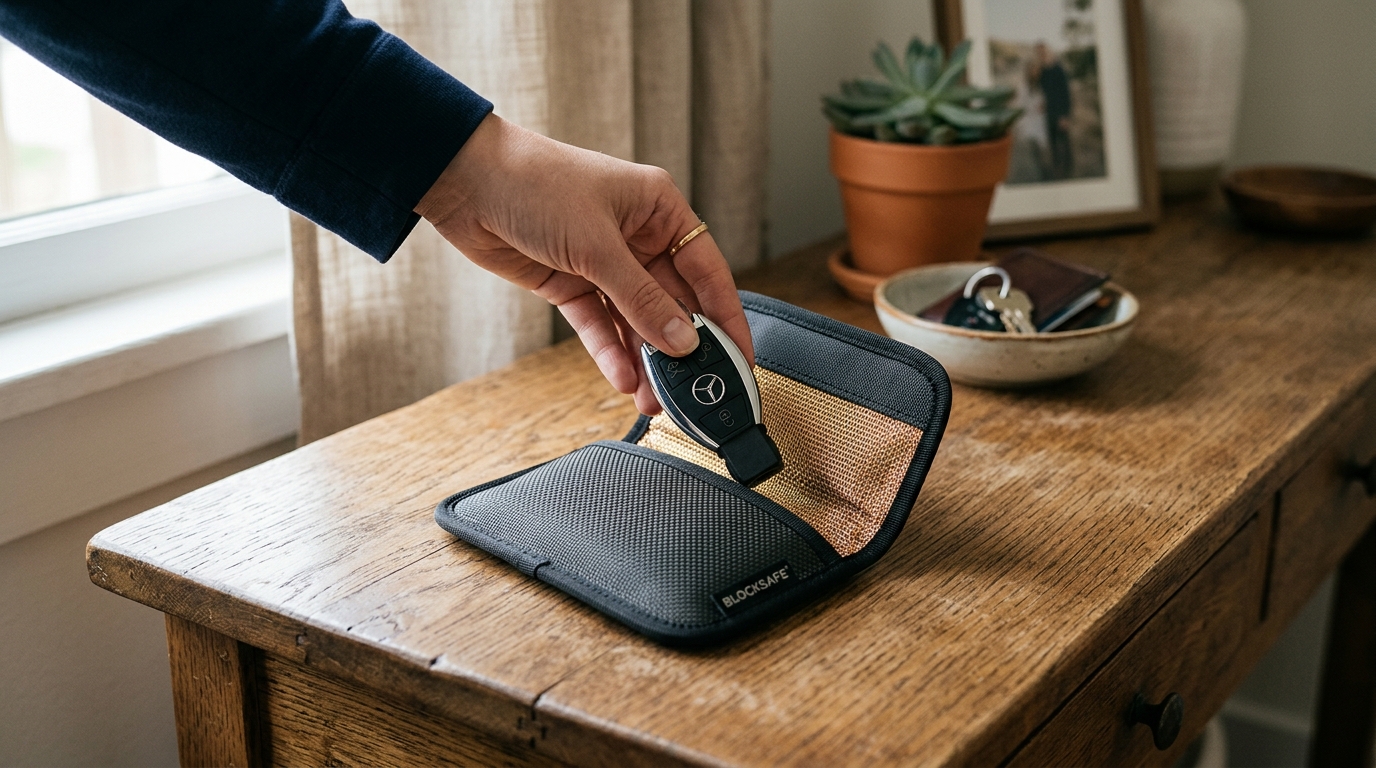
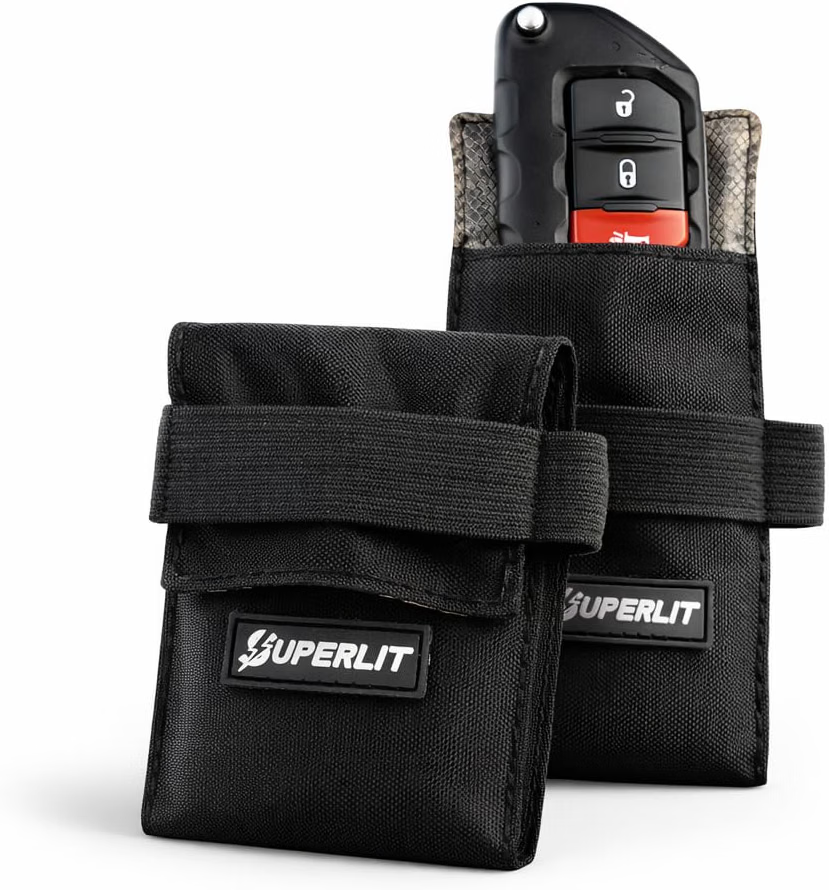
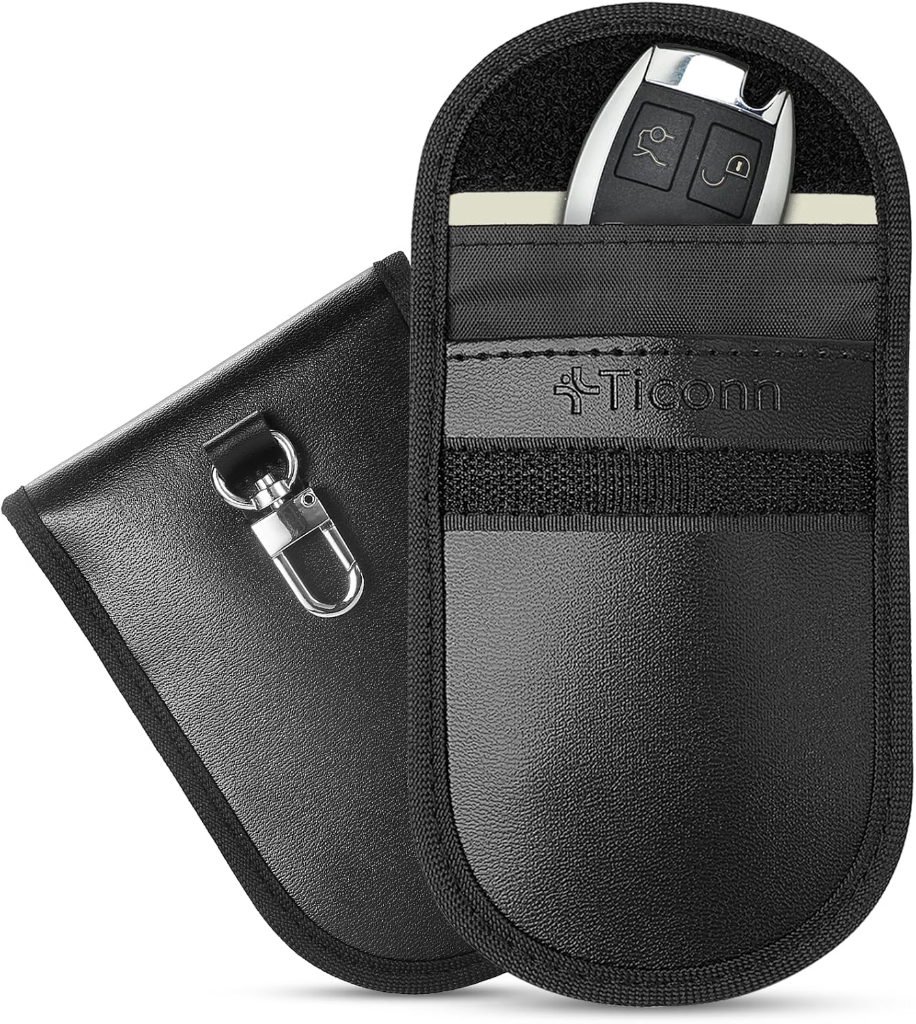
A Faraday pouch for a key fob is a small conductive enclosure designed to block radio communication between the fob and the outside world while it's sealed inside.
For vehicles with a passive-entry system, isolating a key fob this way can interfere with relay attacks that depend on communicating with it. That doesn't make a car theft-proof — a pouch only helps if it's genuinely providing enough shielding and is closed properly, and it addresses one specific vulnerability in your key fob's own signal, not vehicle security as a whole.
This guide covers how relay attacks actually target a key fob, whether yours is realistically at risk, what to look for in a pouch, and how to test one.
At a glance // Key Fob Shielding Evaluation
What it doesIsolates a key fob from wireless communication when properly enclosed.
Common useReducing exposure to relay attacks on passive-entry key fobs.
What mattersShielding coverage, closure quality, fit to your specific key fob, and durability over time.
Easy checkTry the keyless-entry function with your key fob sealed inside the pouch.
Biggest misconceptionA key fob pouch doesn't make a vehicle theft-proof — it addresses one attack method, not vehicle security generally.
// CURATED EVALUATIONS
Key fob Faraday pouches worth considering
A key fob pouch isolates low-frequency (125 kHz) and UHF signals to stop relay theft. Below are five verified options spanning best-selling consumer multi-packs, wide-band technical specifications, layered construction designs, and hedged manufacturer claims.
01
CARBON FIBERBEST SELLER
Lanpard Faraday Bag for Key Fob (2-Pack)
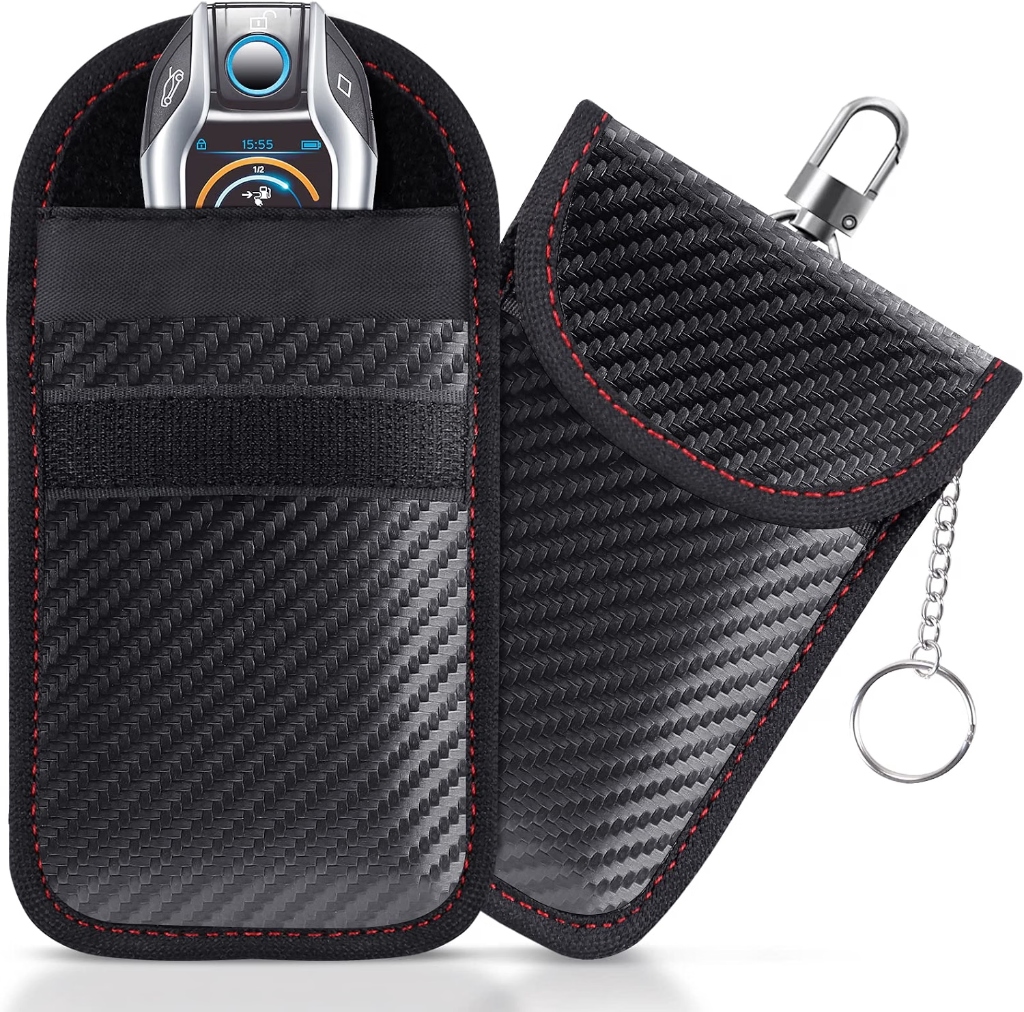
A carbon fiber, double-layer shielded pouch, sized small/medium/large, with an integrated zinc alloy carabiner clip. The listing claims blocking across an unusually broad set of signal types at once — Wi-Fi (2.4/5 GHz), Bluetooth, GPS, RFID, and car key signal — without a specific dB or frequency figure attached to any of them. One phrase worth flagging directly: the listing describes protecting belongings "from EMF" — a framing that leans toward health/safety language rather than a specific, checkable technical claim.
WHAT WE LIKE
Extremely high review count, 52,129 ratings
#1 Best Seller in its category
Three size options for different fob types
WATCH FOR
Broad "blocks everything" claim, no figures given
"Protects from EMF" is vague safety framing, not a spec
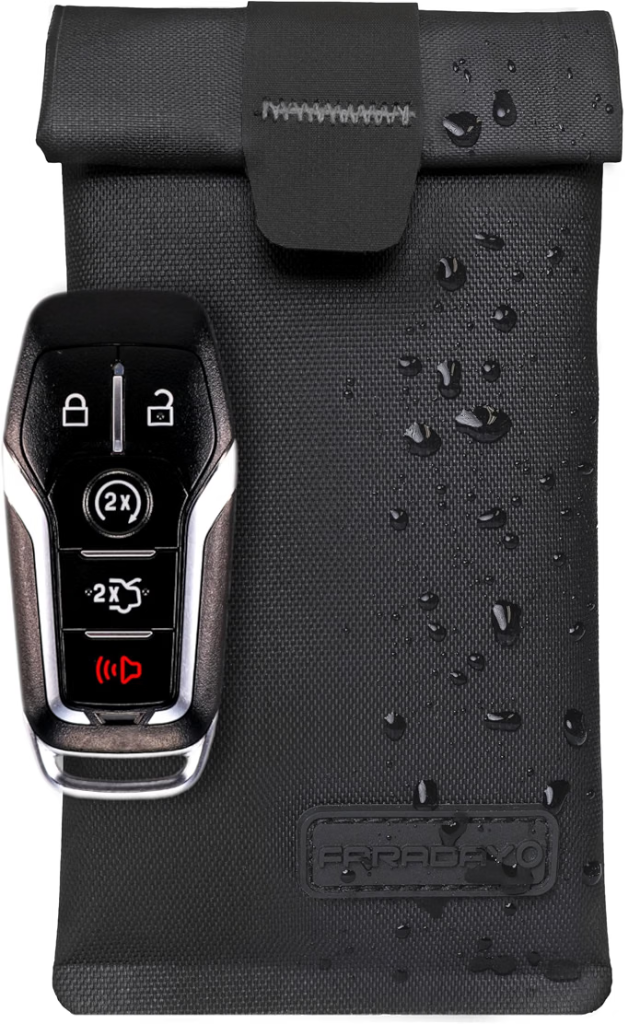
From the same manufacturer as the Faraday Defense phone bag reviewed elsewhere on this site, with a TPU exterior and a double-fold magnetic closure. The stated spec here is even larger than that phone product's: "-90dB attenuation, 400MHz–40GHz" — a wider frequency range than the -85dB/400MHz–4GHz claimed for their phone bag. Worth treating this specific figure with a bit more scrutiny than usual: claiming effective attenuation up into the 40GHz mmWave range is a considerably bigger claim than most products in this category attempt, even from a brand with a track record of giving more specific numbers than most competitors.
WHAT WE LIKE
Same brand as this site's best-evidenced phone product
States both a dB figure and a frequency range
Amazon's Choice, water-resistant construction
WATCH FOR
The 40GHz upper range is a notably large claim
Still a manufacturer figure, not independently tested
From the same brand reviewed elsewhere on this site for phone bags (where its marketing leaned on vaguer language like "vanish from the grid instantly"). This key fob listing is comparatively more measured — no dramatic hyperbole — but introduces a different pattern worth naming: it describes "10 layers" of construction (6 shielding layers, 2 cushioning, 2 outer) without stating what that construction actually achieves in attenuation terms. A detailed-sounding layer count isn't the same thing as a performance figure.
WHAT WE LIKE
More measured language than this brand's phone listing
Metal clip for attaching to bags or belt loops
Reasonably priced at $9.99
WATCH FOR
Only 48 reviews — far fewer than the other four
Layer count described, but no dB/frequency figure given
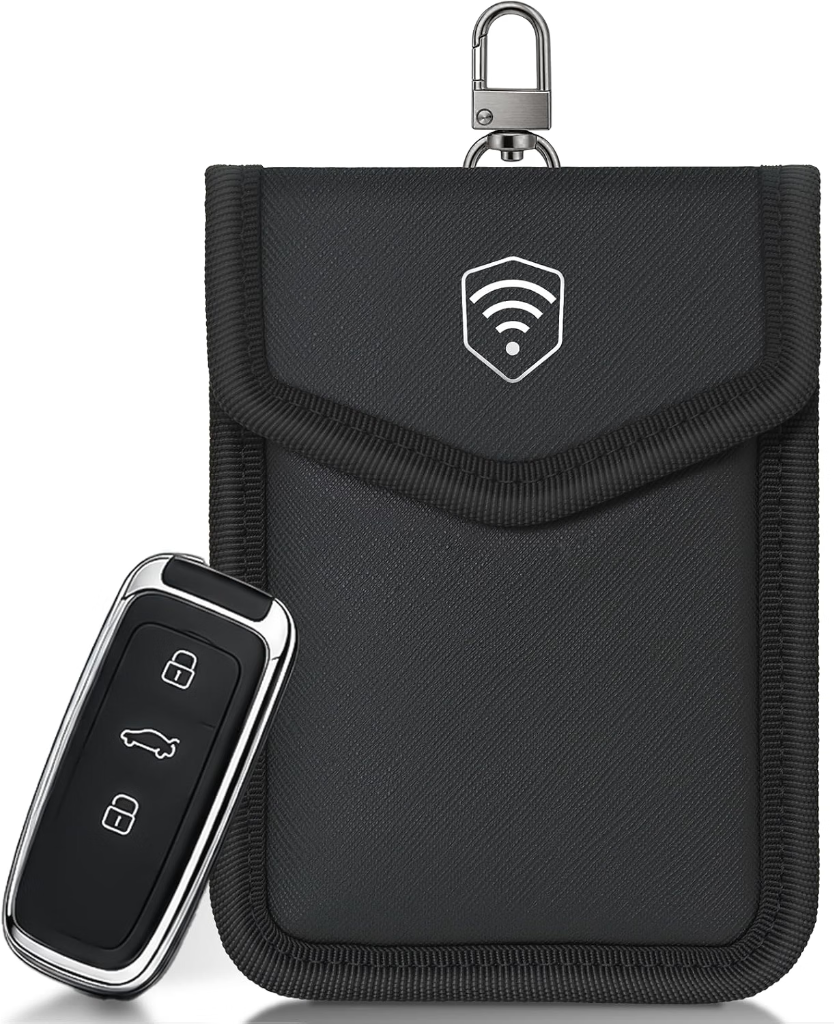
A 2-pack pouch marketed heavily around vague reassurance language — "peace of mind," "surpasses expectations," "blocks EMF signals" — with no frequency or attenuation figure anywhere in the listing. Worth flagging directly: the product's own listing displays a customer review video titled "This product simply does not work as advertised." That's a real, visible signal on the listing itself, not an inferred concern — worth weighing seriously given it's featured prominently rather than buried in a star-rating average.
WHAT WE LIKE
Multiple size options (2-pack, extra large, standard)
USA-made claim, per listing
WATCH FOR
A customer review video on the listing itself says it doesn't work as advertised
Entirely EMF-framed marketing, no technical specification given
A carbon fiber-textured pouch available in three sizes, from the same general product family already established elsewhere on this site. Its language is more measured than most in this category — "helps block" rather than absolute claims — though it still doesn't attach a specific dB or frequency figure to that claim.
WHAT WE LIKE
Very high review count, 19,391 ratings
"Helps block" language, not overclaiming
Three size options for different fob types
WATCH FOR
No quantified attenuation figure despite the reasonable tone
Same brand already featured elsewhere — check for overlap
Affiliate Disclosure: PrivacyLabz may earn a commission from qualifying purchases. This does not affect the price you pay, nor does it influence our editorial evaluations. We have not laboratory-tested these products unless explicitly stated; specifications are cited from manufacturer disclosures and published technical documentation.
How relay attacks actually target a key fob
Passive keyless entry and start systems are built around proximity: when a key fob is close enough to the vehicle, the car’s exterior antenna sends out a low-frequency signal, and the fob responds automatically, without the owner pressing anything.
A relay attack exploits exactly this automatic behavior. Two people work together — one near the key fob (often just outside a house), one near the vehicle. A device near the fob captures its response signal; a second device near the car relays that captured signal, extending its effective range far beyond where it would normally reach. The car, unable to distinguish a nearby key fob from a relayed signal from one, behaves as though the legitimate fob is present.
A closed Faraday pouch interrupts this at the source: if the key fob’s signal can’t reach outside the pouch in the first place, there’s nothing for the first device to capture and relay.
Claim Check
“100% theft-proof car protection”
This significantly overstates what a key fob pouch does. A Faraday pouch addresses relay attacks on the fob’s signal specifically — it does nothing to stop physical key theft, lock picking, or a thief reprogramming a blank key via the vehicle’s diagnostic port. Calling a small pouch “100% theft-proof” conflates a narrow, genuinely useful signal barrier with complete vehicle security, which it isn’t.
What actually matters when choosing a key fob pouch
01 // CLOSURE
Full-width seam contact
Full-width contact along the seam matters more than a narrow velcro tab that leaves gaps at the corners — the same seam-leakage principle covered in Do Faraday bags actually work?
02 // COMPARTMENT
Shielded compartment clearly marked
Some pouches include an unshielded outer pocket alongside the shielded one — make sure it’s obvious which side your key fob actually needs to go in, since the wrong pocket defeats the point entirely.
03 // CLEARANCE
Room for your specific key fob
Larger SUV fobs, aftermarket key fobs, and keychains can strain a too-small pouch at the seam over time — size the pouch to your actual key fob, not just “a key fob” in general.
04 // WEAR LIFE
Expected wear over time
Thatcham Research’s own guidance is direct on this: key fob pouches are typically effective for around six months, sometimes less, before performance degrades from repeated use — which is why they recommend retesting periodically rather than trusting a pouch indefinitely once it’s proven itself when new.
Do you actually need a Faraday pouch for your key fob?
This depends on your specific vehicle and key fob, not a blanket yes or no:
Standard remote fobs, no keyless start. If you have to physically press a button on the key fob to unlock the car, relay theft doesn’t apply to that fob — a pouch adds nothing here.
Sleep-mode key fobs. Some manufacturers let owners enable a mode where the key fob stops broadcasting after a period of inactivity — Thatcham Research describes this ranging from roughly one to two minutes up to 15–30 minutes, depending on the vehicle. A key fob using this mode is significantly less exposed even without a pouch, though it’s worth confirming your own vehicle actually has this feature enabled rather than assuming it does.
Newer vehicles with relay-resistant technology. Some current models use signal-timing methods specifically designed to detect and reject a relayed signal, reducing the vulnerability at the vehicle side rather than requiring the owner to shield the key fob at all. Check with your manufacturer or dealer if you’re unsure whether your vehicle has this.
Core Principle
Relay attacks exploit a key fob’s normal, intended convenience. A Faraday pouch restores the certainty of a physical barrier by removing that automatic radio exchange entirely.
If your key fob uses standard passive entry without a sleep mode or newer relay-resistant technology, and you park somewhere a relay attack is realistically possible — a driveway or street near your home — an inexpensive pouch is a reasonable, low-cost precaution for that specific fob.
Frequently asked questions
How does a relay theft attack actually steal a car?
Two people work together — one capturing the key fob's signal near where it's stored, one relaying that captured signal to the car — tricking the vehicle into detecting a key fob that isn't actually nearby. See the explanation above for the full mechanism.
Why do most key fob pouches have two pockets?
Often one pocket is genuinely shielded and another is a plain storage pocket for cards or coins — make sure your key fob specifically goes in the shielded one, not just wherever it fits.
Does my key fob need a Faraday pouch if it has sleep mode?
Less urgently, but it depends on the specific timing — Thatcham Research describes sleep-mode timing varying from roughly one to two minutes up to 15–30 minutes depending on the vehicle, so a key fob that takes longer to sleep is exposed for longer in between.
How long does a key fob Faraday pouch last before wearing out?
Thatcham Research's own guidance: typically around six months, sometimes less, before performance can degrade — worth retesting your key fob pouch periodically rather than assuming indefinite performance.
How can I test if my key fob Faraday pouch works?
Confirm your keyless entry works normally with the key fob outside the pouch first, then seal the fob and attempt to use the vehicle as normal — no response is the sign it's working. Full walkthrough in How to test a Faraday bag at home
Does a Faraday pouch protect against all types of car theft?
No — it addresses relay attacks on the key fob's wireless signal specifically. It does nothing about physical key theft, lock picking, or other theft methods unrelated to the fob's passive signal.
Sources Used
Thatcham Research (via Honest John, Motoring Research, and Insurance Edge reporting) — Supports the “six months, sometimes less” pouch effectiveness guidance, sleep-mode key fob timing range, and general relay-attack mechanics.
Flagged for manual verification, not carried forward as confirmed: The prior draft cited “ADAC (Allgemeiner Deutscher Automobil-Club) Keyless Security Audits” testing 500+ vehicles at specific frequencies. ADAC is a real organization that does publish genuine keyless-security research, but this specific claim or figure has not been independently verified here, so it is not repeated as fact.
Removed from the prior draft, not carried forward: The specific “3 to 5 feet” relay-trigger distance, the named list of manufacturers (BMW/Mercedes-Benz/Audi/Volkswagen/Jaguar Land Rover/Ford) attributed to sleep-mode adoption, the UWB time-of-flight mechanism description, and the “40 to 120 seconds” sleep-mode figure, which directly contradicted the verified Thatcham-sourced range already verified for this site.
Explore Faraday Protection by Device
Navigate our practical guides across each device shielding category: